How Many Grand Canyons Are There? National Park vs. Parashant vs. West

Lipan Point Grand Canyon National Park South RIm Weddings and Elopements

With a name like the “Grand Canyon,” you’d think there could only be one. Then you start planning a trip and realize the name gets used for several very different destinations. Grand Canyon West is not the same as Grand Canyon National Park. Grand Canyon-Parashant National Monument is something else entirely.

Add in places like Marble Canyon, Glen Canyon, and overlooks or attractions that borrow the Grand Canyon name, and things can get confusing quickly.

The reality is that “Grand Canyon” is often used as both a specific national park and a broader regional label. Some areas are managed by the National Park Service. Others are on Tribal lands or protected monuments.

This identity confuses some people trying to plan a Grand Canyon wedding, elopement, or special event. Let’s clear that up.

Rim Worship Site at Grand Canyon with Grand Canyon Wedding Packages

The Geological Footprint of the Grand Canyon

Long before maps, park borders, or tourism campaigns existed, the Grand Canyon was part of a massive geological story unfolding across the Colorado Plateau.

The canyon system carved by the Colorado River generally begins in Marble Canyon near Lees Ferry in northern Arizona. The landscape transitions from narrower canyon walls into the immense chasm most people associate with the Grand Canyon today.

From there, the canyon stretches westward for hundreds of miles, cutting through layers of ancient rock to Black Canyon. It eventually eases toward the basin that now feeds into the Lake Mead region.

How the Grand Canyon Is Divided Today

This is where planning a Grand Canyon wedding or elopement gets tricky, because many locations offer some type of special event access.

However, the iconic views you see from Grand Canyon Wedding Packages only come from one of the many locations with “Grand Canyon” in the name. It’s also the place most people think of when the Grand Canyon comes to mind.

There are three names most associated with the Grand Canyon:

  • Grand Canyon National Park
  • Grand Canyon West
  • Grand Canyon-Parashant National Monument

Map of Grand Canyon

This map shows the different locations of Grand Canyon National Park, Grand Canyon West, and Grand Canyon-Parashant National Monument.

4 Grand Canyon Locations in the Grand Canyon Footprint

Now, let’s take a closer look at each of the three locations using the Grand Canyon name to help you with planning your event. The location is important, but also knowing what is or isn’t allowed, and the travel time and difficulty included.

Grand Canyon National Park

This is the Grand Canyon most people picture when they imagine sweeping overlooks, layered canyon walls, and iconic South Rim views. The national park protects a large stretch of the central canyon corridor.

It generally extends from the Marble Canyon region near Lees Ferry westward toward the remote western canyonlands near the Hualapai borderlands.

It is also the most accessible section of the canyon for visitors. Paved highways connect the park to major gateway cities like Las Vegas, Flagstaff, and Phoenix. Reaching the South Rim doesn’t require off-road vehicles or backcountry travel experience.

Unlike many protected national park areas, weddings and elopements are allowed at select designated viewpoints and ceremony sites through a permit process managed by the National Park Service.

Those include:

Grand Canyon Village anchors the South Rim, along with a historic district, lodging, visitor’s center, and shuttle hub. Weddings are not allowed below the rim.

TRAVEL TIP: Grand Canyon National Park’s South Rim is 280 miles, about 4:30 drive time, from Las Vegas. From Phoenix, it’s 225 miles and about 3:45 drive time.

If you’re in Las Vegas and you see Grand Canyon wedding opportunities that seem close to the city, that’s Grand Canyon West.

Lipan Point Grand Canyon National Park South RIm Weddings and Elopements

Grand Canyon West (Hualapai Indian Reservation)

Grand Canyon West sits on the reservation lands of the Hualapai Tribe along the western edge of the canyon. The Hualapai Reservation was formally established in 1883. However, the Hualapai people lived throughout this region long before modern borders existed.

This is Tribal land, not part of Grand Canyon National Park. The area is managed by the tribe instead of the National Park Service. That means different rules, different attractions, and separate entrance fees.

The area became world famous after the opening of the Grand Canyon Skywalk in 2007. The glass bridge extends over the canyon rim and lets visitors look straight down into the canyon below.

Grand Canyon West is also known for helicopter tours, cultural experiences, and viewpoints along the western canyon corridor. Compared to the national park, it is much closer to Las Vegas.

If you see Grand Canyon wedding experiences that allow you to land via helicopter on the Canyon bottom, that’s Grand Canyon West. The activity isn’t allowed in Grand Canyon National Park.

Grand Canyon-Parashant National Monument

Sitting on more than one million acres, Grand Canyon-Parashant National Monument protects a huge and remote section of canyon country west of Grand Canyon National Park. The National Park Service and Bureau of Land Management co-manage this landscape.

Logistics and landscape make this a challenging place to plan a wedding or elopement. First, the co-management means that the location of the wedding would require a specific permit from an individual agency or both.

Second, the landscape is beautiful but brutal. This is not the polished, easy-access version of the canyon most visitors imagine. The monument is known for rugged backroads and extreme isolation. No services, power, mobile service, or paved roads are in the monument.

Third, as one of the least-visited public land sites in America, you have no help if things go sideways. Consider Grand Canyon-Parashant as an option for honeymoons if you’re an adventurous couple skilled in backcountry expeditions and self-survivial skills.

Supai Village | Havasupai Tribe

Deep within a side canyon of the greater Grand Canyon system sits Supai, the main village of the Havasupai Tribe. It sits between Grand Canyon West and Grand Canyon National Park on the south side of the Colorado River.

Today, the reservation is known worldwide for its bright turquoise waterfalls and striking red rock canyon scenery. Reaching Supai requires a hike or horseback ride of about eight miles into the canyon or a helicopter service that operates on a limited schedule. No roads lead directly into the village.

The area is managed entirely by the tribe. Visitors must obtain permits and reservations through the Havasupai Tribe, often months in advance.

Havasu Falls on tribal land outside of Grand Canyon National Park is only accessible by reservation and requires a long hike or helicopter ride.

Planning a Grand Canyon Wedding or Elopement at the National Park

The Grand Canyon is far bigger and more complex than many visitors realize. Some areas are designed for easy sightseeing. Others are remote wilderness. Some are managed by the National Park Service, while others are Tribal lands with their own rules, permits, and traditions.

For most couples, Grand Canyon National Park offers the best balance of iconic scenery, accessibility, and approved ceremony locations. At Grand Canyon Wedding Packages, we can design your ideal wedding, viewpoint, and amenities within the national park.

Of course, the canyon is only part of the story in Northern Arizona. Some couples prefer the pine forests and mountain views near Flagstaff. Others fall in love with the red rocks and desert scenery around Sedona.

We help couples navigate the differences between these destinations and plan an experience that fits their vision, comfort level, and sense of adventure. You can also explore things to do in Northern Arizona as you’re planning your Grand Canyon destination wedding.

Which Time Zone Is the Grand Canyon In? Season Guide + Tips

“What time is it in Arizona?” It’s a simple question with a not-so-simple answer, depending on what time of year and what part of Arizona you’re visiting. The Arizona time zone confuses some because the state doesn’t adhere to Daylight Saving Time.

If you’re trying to schedule travel plans or an itinerary for a Grand Canyon wedding, we’re here to make “Arizona Time” easier to understand.

We found this topic especially important since many online articles about Arizona’s time zone were more confusing than helpful. Read on to find out everything you need to know about Arizona’s unique time zone.

NOTE: For ease of reading this article, Standard Time references will be referred to as “winter,” while Daylight Time will be listed as “summer.”


Why Doesn’t Arizona Follow Daylight Saving Time?

To answer that question, it helps to know the purpose of the time change. Time zones were established by railroads in the late 1880s, and every state was on Standard Time.

The idea of moving ahead one hour in the spring came from the energy-saving cost benefits during wartime in the early 1900s. It then transitioned to the benefit of having an extra hour of daylight in the evening during the warmer spring and summer months.

The Uniform Time Act of 1966 established a fixed schedule of Daylight Saving Time at the federal level. Since then, Daylight Saving Time has started on the second Sunday in March and ends on the first Sunday in November–always on a weekend and always at 2am local time. In March, all clocks move forward one hour. In November, clocks “fall back” an hour.

Arizona wasn’t happy with Daylight Saving Time from the start. Simply put, Arizona leaders believed the state already had enough heat and sun in the summer. Plus, adding an hour would increase energy consumption and costs for air conditioning.

Plus, consider that even without Daylight Saving Time, August temperatures at the bottom of the Grand Canyon reach 106° F on average and reach 110° F in Yuma. Another hour of summer sunshine wasn’t necessary or desired.

Is Daylight Saving Time Optional? Under the Uniform Time Act of 1966, states have the option to exempt themselves from DST by passing a state law or regulation. Arizona, along with Hawaii, has chosen not to observe it.

Not ALL of Arizona Skips Daylight Saving Time

The only exception to Daylight Saving Time in Arizona is the Navajo Nation, a sovereign nation with a footprint that is largely in northeastern Arizona but also expands to Utah and New Mexico.

The decision to adopt Daylight Saving Time in the Navajo Nation keeps the multi-state land in the same time zone year-round.

However, there are more exceptions within that exception. Keep reading for specific examples.


How Does Daylight Saving Time Impact Arizona?

At the root of Arizona time zone comprehension is understanding that half the year, Arizona is in tandem with the Mountain Time Zone. The other half of the year syncs with the Pacific Time Zone.

When visitors outside the state make travel arrangements, things can get tricky. This is also where many sources make it overly confusing.

Arizona is always in Mountain Standard Time, which is not the same as saying Arizona is always in the Mountain Time Zone.

Arizona is always in Mountain Standard Time, which is not the same as saying Arizona is always in the Mountain Time Zone. Mountain Standard Time is always UTC-7. (UTC, or Universal Time Coordinated, serves as the time zone baseline from which all other time zones are calculated. Here’s an easy UTC clock.)

In winter, Arizona is on Standard Time (UTC-7). When other states “spring forward” in March, that means they are on Daylight Time. Utah goes from Mountain Standard Time to Mountain Daylight Time for summer, which is UTC-6. Since Arizona doesn’t change, it’s still at UTC-7. Technically, it’s still on Mountain Standard Time.

It’s the “Mountain Standard Time” year-round part that confuses some because flights, weddings, and attractions aren’t booked with that caveat in mind. They are booked based on Pacific Time and Mountain Time in mind, whether it’s summer or winter (Daylight or Standard).

Now, to further understand, it’s important to note that Pacific Standard Time is UTC-8, but when Daylight Saving Time kicks in, the one-hour leap puts it at UTC-7, which is the same as Arizona. In summer, it’s most commonly understood that Arizona is on Pacific Daylight Time since they are both UTC-7.

Arizona technically sticks to Standard Time year-round. It’s just easier to say, “Arizona is in the Pacific Time Zone in the summer.”

Harun Mehmedinovic grand canyon wedding packages destination weddings USA

Examples of Arizona’s Time Zone Travel Impact

The concept becomes easier to understand when you look at real-life examples of how this transition can impact a trip to the Grand Canyon for a wedding or elopement.

Driving from Las Vegas to the Grand Canyon

If you’re flying into Las Vegas (LAS) for the drive to the Grand Canyon’s South Rim in summer, the route is 280 miles and will take about four hours and 15 minutes. Nevada and Arizona will be in the same time zone. If you leave Las Vegas at noon, you’ll arrive at Grand Canyon Village around 4:15pm.

Leaving LAS on a winter day still takes about 4:15 drive time. The difference is that LAS will be on Pacific Standard Time. When you cross into Arizona, you’ll be on Mountain Standard Time, meaning the clocks move ahead an hour. That same drive has an arrival time of 5:15pm, even though you’ve driven the same distance.

On the return trip, driving from the Grand Canyon to LAS means you leave at noon, making the four-hour 15-minute drive, but you’ll go back an hour when you cross into Nevada. That means instead of arriving at 4:15pm, you’ll arrive at 3:15pm during winter.


Flying Between Time Zones to Arizona

Those flying into Phoenix might notice something odd when booking flight times from different time zones. Let’s look at Denver as an example.

Denver and Phoenix are both in Mountain Standard Time in winter. The flight between the two cities takes roughly two hours. A noon flight out of DEN in winter will get you to PHX at 2pm.

That same flight that leaves at noon in summer will have an arrival time of around 1pm since you “gained an hour” flying from Denver’s Mountain Time zone to Arizona’s alignment with Pacific Daylight Time.

On the other hand, flying from Los Angeles is always a 90-minute flight. However, in winter, a 7am flight gets you into Phoenix at 9:30am. That’s due to 90 minutes of flight plus the hour gained when moving between Pacific Standard Time and Mountain Standard Time.

In summer, the 7am flight lands at 8:30 am since both L.A. and Phoenix are in sync with Pacific Daylight Time.


Arizona Time Zone Easy Calendar

Visiting Antelope Canyon, Glen Canyon, or Monument Valley

As noted above, the Navajo Nation adheres to Daylight Saving Time. When planning things to do during your Grand Canyon wedding trip, you’ll run into places that are in Utah or within the boundaries of the Navajo Nation.

Again, in winter, Arizona, Utah, and the Navajo Nation are in the Mountain Time Zone. Planning times aren’t a challenge. However, summer is where things get confusing when Utah is one hour ahead of Arizona.

Here’s why:

  • Glen Canyon National Recreation Area: While most of the NRA and Lake Powell are in Utah, the headquarters is in Arizona. That means the entire NRA is at the same time as the Grand Canyon, no matter what.
  • Antelope Canyon: While this stunning slot canyon wonderland is on the Navajo Nation, it is an exception to the Daylight Saving Time rule. Since tours are required to explore the canyons, organizers found it easier to keep those on Arizona Time.
  • Vermilion Cliffs National Monument: Depends on where you are within the monument, but all permit system times are based on the Utah/Navajo Nation. In-person activities and hikes will follow the time zone of the state you are in.
  • Monument Valley: This spectacular scenic drive straddles Utah and Arizona but is within the Navajo Nation. Daylight Saving Time applies. It will always be in the same time zone as Salt Lake City.
Vermilion Cliffs The Wave Coyote Butte North Arizona

Adjusting Your Phone for Arizona Time

Whether the Grand Canyon wedding couple or members of the wedding party want to explore beyond the Grand Canyon, it’s important to know that mobile phones don’t understand these complex rules.

Your phone and vehicle clock will change with the firm boundaries controlled by GPS. This is where location tracking for clocks can cause additional problems since you’ll never be 100% sure if the time is correct. But there is a solution.


Sunrise and Sunset Times at Grand Canyon’s South Rim

We know many couples want to have a sunset wedding or photo shoot, and you can plan around that time of day. It’s just as important to prepare for the Grand Canyon South Rim weather as it is for the sun angle.

While the days get longer or shorter with the seasonal transitions, the lack of adjusting an hour forward or back for Daylight Saving Time gives a more consistent time frame for sunset viewing and photos.

On the shortest day of the year, December 20, days last about nine hours and 45 minutes. Sunrise happens at 7:30am, and sunset is 5:15pm. On the longest day of the year, July 20, expect 14 hours of daylight, with the sunrise at 5:27am and sunset at 7:42pm.

That means Grand Canyon sunsets at the South Rim will always be somewhere between 5:15pm and 7:42pm.

MORE: Full list of sunrise, sunset, moonrise, and moonset times from Grand Canyon National Park


Take Time to Explore Grand Canyon Elopement Possibilities

We wrote this article to help clear confusion, not create it. At the same time, it is always helpful to confirm with a vendor which time zone transition they adhere to in the summer.

You can also contact us with questions or to start planning a wedding, elopement, or proposal.


Pin Arizona Daylight Saving Time Explainer

3 Things to Know About Planning a Grand Canyon Winter Wedding

The Grand Canyon in winter offers an enchanting landscape for weddings or elopements. The crisp air, tinged with the possibility of snow, sets a serene stage as the canyon’s deep, rich colors contrast beautifully with the season’s quiet.

Whether it’s a cozy, intimate elopement or minimony under the vast sky, the Grand Canyon in winter offers a backdrop that feels both adventurous and deeply romantic.

The team at Grand Canyon Wedding Packages put this guide together based on years of experience, feedback from clients, and important information every couple should know before a Grand Canyon winter elopement or ceremony.

flower bouquet and shoes on a bed of snow for a Grand Canyon winter wedding

1. Winter Wedding Locations in Grand Canyon National Park

Choosing the perfect viewpoint for your Grand Canyon winter elopement or wedding is easy with our complete guide of the top six locations.

While five of them make great winter wedding spots, a few stand out for accessibility in the event of a winter storm or heavy snowfall. Plus, one location closes during winter.


Pima Point

Elevation: 6,500’

Special Use Permit Fee: $240

At the far west end of the South Rim, Pima Point stands as a winter-only wedding option. That’s because Hermit Road is only open to private vehicles during the shuttle off-season, which is December through February.

Pima Point sits seven miles west of Grand Canyon Village and is literally the end of the road before trails weave down into the Grand Canyon. You get to see some of the oldest bedrock in the landscape and hear the mighty Colorado River 4,000 feet below.


Rim Worship Site

Elevation: 6,800’

Special Use Permit Fee: $240

The Rim Trail is paved and level, with great views along the 15-30 minute walk from the collection of hotels nearby. This location, close to Grand Canyon Village, offers one of the most accessible winter wedding options at the South Rim.

The Rim Worship Site rises above the Bright Angel Trail and offers a stone altar with room for up to 50 people.


Grandeur Point

Elevation: 7,050’

Special Use Permit Fee: $240

Grandeur Point piques the interest of many winter wedding couples due to its proximity to Grand Canyon Village; the walk is 5-10 minutes. Walk along the Trail of Time to start your happily ever after.

The sunsets here attract crowds, but with lower visitation at the Grand Canyon in winter, don’t worry about overcrowding. Yavapai and Hopi Points get the largest crowds.

The site accommodates up to 45 people, with an overlook showcasing Bright Angel Trail, including Jacob’s Ladder switchbacks, Havasupai Gardens, and Plateau Point. 

Couple embracing among the inversion at a Grand Canyon Winter Wedding

Shoshone Point, Lipan Point, and Moran Point Winter Weddings

The remaining three locations are located off of Desert View Drive, which closes first during major winter storms. Again, that is not a super common problem, and we handle the dynamics of finding a new location in those rare events. If you have your heart set on Lipan Point or Moran Point, don’t let winter weather concerns get in the way.

Shoshone Point is the only location off-limits on the South Rim in winter. Special Use Permits are only available between May 15 and October 15 here.


2. Grand Canyon Winter Weather

One of the biggest misconceptions about the Grand Canyon wrongly assumes it’s always hot there. After all, it’s close to Phoenix and Las Vegas, right? Not at all.

The South Rim sits around 7,000 feet in elevation on the Colorado Plateau, giving it cooler temperatures year-round than the basin below but also potentially bringing winter weather in late fall or early spring.

You can read our full month-by-month weather guide for planning a Grand Canyon wedding or elopement, but here’s a winter summary.


November at Grand Canyon’s South Rim

  • Average High: 52°F
  • Average Low: 27°F
  • Average Snowfall: 2.2”
  • Sunrise/Sunset: 7:00am/5:23pm

While still technically autumn, there’s always a chance you can get a winter wonderland Grand Canyon wedding before the rush of the holiday season.

By November, crowds drastically thin out compared to the peak in July. The first snow of the year arrives in November (on average) with a manageable dusting or, at most, a few inches.

The average day at the South Rim will be in the 50s. 


December at Grand Canyon’s South Rim

  • Average High: 43°F
  • Average Low: 20°F
  • Average Snowfall: 8”
  • Sunrise/Sunset: 7:28am/5:14pm

Winter arrives in full force by December at the South Rim, with crowds only slightly smaller than in November.

December often brings cloud inversions to the Grand Canyon because cooler air gets trapped below warmer air in the canyon, creating a layer of fog or clouds. This phenomenon is more common in winter due to longer nights and reduced daytime warming.

However, some of the most amazing wedding photographs can be taken when this phenomenon happens. The only potential downside is that you won’t get the depth views of the canyon when thick fog inversion fills the lower elevations.

Inversion is fleeting and rare, so you can’t plan for it, either.

Couple sitting on a ledge at a Grand Canyon wedding with inversion causing clouds in the canyon with snowcapped mountains surrounding them.

January at Grand Canyon’s South Rim

  • Average High: 41°F
  • Average Low: 18°F
  • Average Snowfall: 12.9”
  • Sunrise/Sunset: 7:39am/5:35pm

January brings the snowiest month of the year to the South Rim and is one of the least visited months at Grand Canyon National Park.

On average, monthly totals measure at least a foot of snow. Daytime highs average in the 40s, but lows dip into the teens. A random day in the upper 60s isn’t out of the question, but on the flip side, lows have gotten down to a bitter -29°.


February at Grand Canyon’s South Rim

  • Average High: 45°F
  • Average Low: 21°F
  • Average Snowfall: 7.8”
  • Sunrise/Sunset: 7:21am/6:04pm

A Grand Canyon winter wedding in February means another snowy month, with the potential for larger snow events like in February 2019 when 40.8 inches fell with one snowstorm in Flagstaff. 

The freeze-thaw cycle from daytime highs above freezing and nighttime lows below freezing can lead to icy spots on walkways. Expect highs in the mid-40s, with the potential to get into the 50s.

January and February offer the smallest crowds of the year, as they are the least visited months at Grand Canyon National Park. Crowds drop to 75% lower than the summer peak, and March will bring a 50% increase in visitors.

Those who love winter will appreciate the solitude of a Grand Canyon winter wedding. 

couple embracing at a Grand Canyon winter wedding with a wall of greenery behind them and snow on the ground.

March at Grand Canyon’s South Rim

  • Average High: 51°F
  • Average Low: 25°F
  • Average Snowfall: 8.1”
  • Sunrise/Sunset: 6:45am/6:32pm

March could almost be split into two months at the Grand Canyon, with the first half looking a lot like February. Later in March, temperatures can reach highs in the low to mid-70s. However, a warm spell is generally followed by a temperature drop. 

This is the time of year when you could get winter and spring over just a day or two. The eight inches of snow that fall on average here tend to happen earlier in the month. By late March, windy days – from inconvenient to excessive – are more common. 


Grand Canyon North Rim Note

If you want to experience the North Rim before or after your Grand Canyon destination wedding or elopement, you should know that idea is a non-starter in winter. The Grand Canyon’s North Rim closes from October 15 through May 15 annually.

Take a look at this photo to see how deep the snow gets on the North Rim!

Grand Canyon Lodge North Rim Snowed In
This photo shows how much snow can accumulate on the North Rim of the Grand Canyon, leading to annual closures from October 15 through May 15. (NPS Photo)

Grand Canyon & Northern Arizona Winter Weather Resources

Preparing for a winter wedding at Grand Canyon National Park’s South Rim means keeping an eye on the sky and the roads.

Here are the most helpful tools:

One final thing to note on this topic–Grand Canyon National Park uses rock cinders to allow for better vehicle traction. No salt, brine, or snow melt is used ahead of a storm to limit snowfall accumulation.

Grand Canyon winter wedding

3. Grand Canyon Winter Elopement Specialties

The South Rim remains open year-round. That includes Desert View’s visitor center and cultural demonstrations. If you’re planning a winter sunset elopement, here’s some helpful information:

  • December: 5:14-5:17pm sunset
  • January: 5:24-5:32pm sunset
  • February: 5:55-6:14pm sunset

Another consideration for a wedding at the Grand Canyon in winter is our Grand Canyon Railway Elopement package. The train goes from Williams, Arizona, to Grand Canyon Village.

Our team of wedding planners can also help add excursions, like a helicopter tour over the Grand Canyon. The choppers follow strict requirements to avoid disturbing the peace of the park, which means no landing near the river inside the national park. These flights are available year-round, weather permitting.


Is a Wedding at the Grand Canyon in Winter Worth It?

More often than not, the Grand Canyon in winter is a magical place with a touch of snow and stunning scenery. A winter elopement or micro wedding offers more solitude, smaller crowds, and a unique atmosphere–with some ceremonies appearing as if they were in a snow globe.

Reach out to Grand Canyon Wedding Packages today to start planning the winter wedding of your dreams.


Pin Grand Canyon Winter Wedding Planning

Micro Wedding, Elopement, or Minimony: What’s the Difference?

bride and groom eloped at shoshone point grand canyon

Congratulations on your engagement! Planning a wedding, especially at a stunning place like the Grand Canyon, brings so much excitement but also a slew of new ways to say “I’m getting married.” This includes terms like micro weddings, elopements, and minimonies.

We’re going to give simple, easy-to-understand explanations and details about each type of ceremony to find the one that suits your big day the best.

grand canyon wedding package elopement destination

Table of Contents: Micro Wedding, Elopement, and Minimony


How to Start Planning Your Grand Canyon Wedding

Before getting swept up in the title of your destination wedding at the Grand Canyon, Flagstaff, or Sedona, it all starts with what you want your event to look like.

How many people do you want? Micro weddings, minimonies, and elopements largely fall into particular categories based on how many guests you’ll have.

Do you want a reception? Another key factor to choosing an elopement vs. minimony vs micro wedding is if you’ll have a reception following the ceremony. Again, there is no right or wrong answer. You choose what fits your preferences and budget.

What traditional or unique aspects would you like? Elopements and weddings at the Grand Canyon can be short and sweet, with just exchanging vows at one of six scenic viewpoints. Yet others choose additional activities like family photos, cake cutting, dinner and sunset viewing.

Micro Wedding at Shoshone Point
Grand Canyon Wedding Packages can help you plan your perfect micro wedding at the South Rim of the Grand Canyon.

Understanding Elopements

Elopements used to carry a bit of a stigma, often associated with hasty, secretive ceremonies. However, modern elopements are far from this stereotype.

Today’s elopements are intentional, intimate, and often quite romantic. The focus is on the couple, from laid-back to bougie. They typically involve just the couple, an officiant, and up to 10 special guests.

Elopements eliminate traditional pressure points of a full-blown wedding extravaganza. This simplicity allows for a deeply personal and meaningful experience, especially when at a destination location like the South Rim of the Grand Canyon.


Minimony Meaning

The term “minimony” emerged during the COVID-19 pandemic as couples were forced to rethink their wedding plans due to restrictions on gatherings. While we’re beyond pandemic restrictions, the term wed itself into planning vernacular.

A minimony is essentially a mini ceremony—but larger than an elopement. Guest lists generally fall into 11-25 people, and Grand Canyon Wedding Packages can accommodate any add-ons you’d like, such as family photos.

The biggest difference between a minimony and an elopement or micro wedding is a minimony doesn’t have a meal served. Minimonies are usually planned with the intention of hosting a larger celebration at a later date. The idea is to create a meaningful moment that can later be expanded upon.

Shoshone point minimony

What is a Micro Wedding?

A micro wedding scales back traditional wedding festivities. Typically, micro weddings involve 20-50 guests. You get a pared-down experience while still having a dinner, sunset viewing, cake cutting, or first dance for the couple or with parents.

If you want the traditional wedding experience but with more focus on specific activities, like cake cutting and a meal, a micro wedding might be the perfect fit.

Micro Wedding Shoshone Point
Micro Weddings pare down the traditional wedding activities but still offer intimate and exquisite options like a catered dinner.
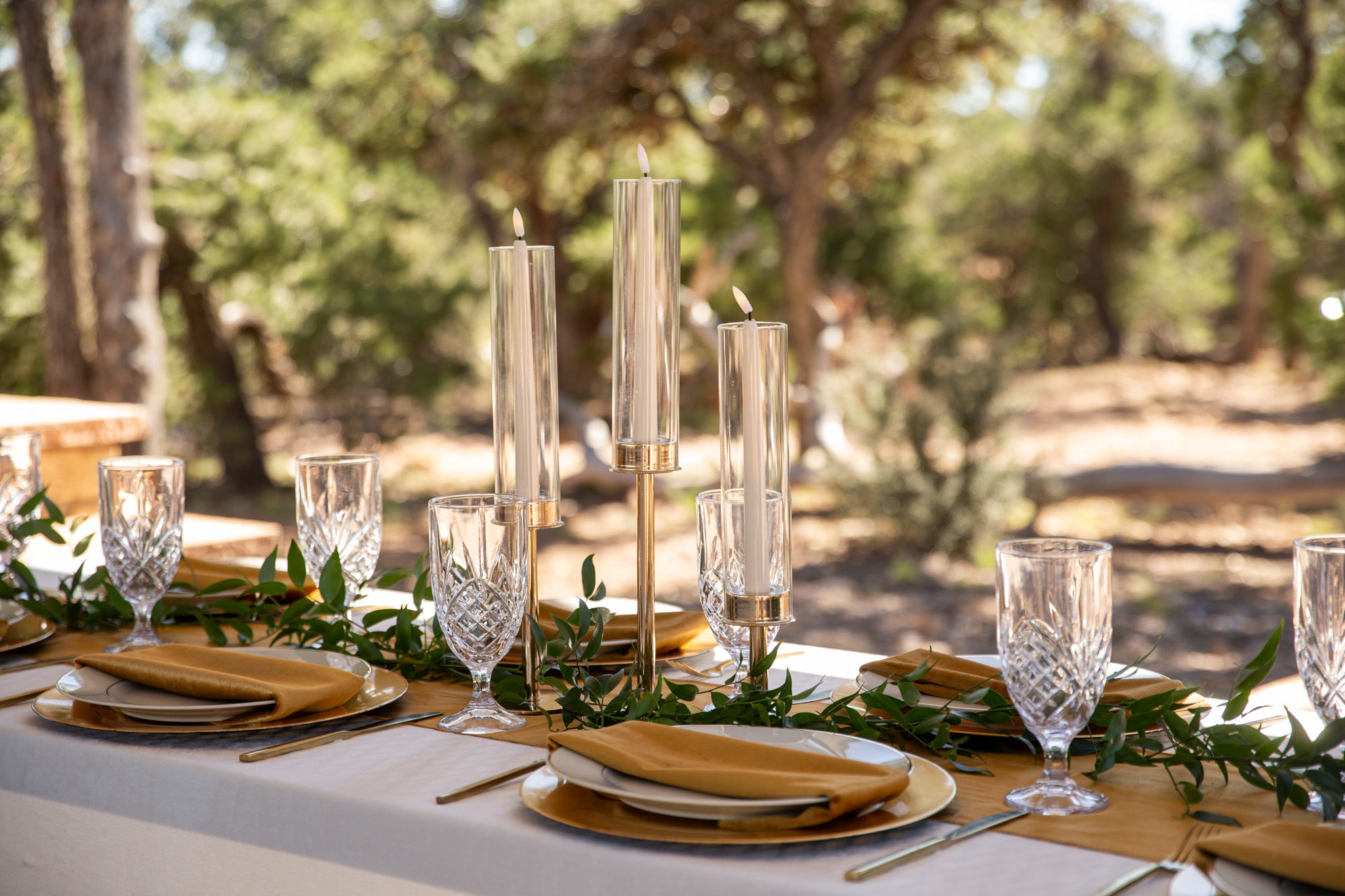
Shoshone Point Micro Wedding Table Setting

Summary of Elopement vs. Minimony vs. Micro Wedding

Elopement

Intimate group size up 10 guests, possibly with a chef’s meal.

Our Elopement Packages

Minimony

Ceremony with 11-25 people. No reception dinner.

Wedding Locations at Grand Canyon

Microwedding

About 20-50 people, with a pared-down version of a traditional wedding.

Our Micro Wedding Packages


Planning a Grand Canyon National Park Wedding

As noted above, it’s less important if you have a micro wedding, minimony, or elopement and more important to have the wedding day of your dreams.

We’ve hosted hundreds of weddings throughout Northern Arizona, with specialties at the Grand Canyon’s South Rim, Flagstaff, and Sedona. Reach out to us to start planning your Northern Arizona destination wedding today.


Pin Micro Wedding, Elopement, and Minimonies Explained

What is an elopement graphic
What is a minimony graphic
what is a micro wedding graphic

How to Plan a Dog-Friendly Grand Canyon Wedding

A small white dog at a Grand Canyon wedding

Grand Canyon National Park is one of the most dog-friendly national parks, particularly for those planning a wedding on the South Rim. 

We’ve planned many Grand Canyon weddings that include dogs as part of the celebration. Grand Canyon dog lovers need the right places to maximize the experience for the humans and four-legged friends before, during and after the ceremony. 

The Grand Canyon offers a unique setting for a memorable and intimate ceremony. However, organizing a wedding here, especially one that includes your dog, requires thoughtful planning and attention to detail.

A dog-friendly Grand Canyon wedding with a bridge and groom embracing their pet with the canyon in the background.

Grand Canyon National Park Dog Rules

Dogs don’t get free reign at Grand Canyon National Park for their own safety and the safety of the people visiting. 

While many national parks are strict about dog access, the Grand Canyon offers more flexibility. It’s especially convenient for those getting married as the top locations approved for Grand Canyon weddings are also dog-friendly. 

The basic rules for bringing a dog to the Grand Canyon are:

  1. Dogs must be on a leash no longer than six feet at all times.
  2. Pets are only allowed above the rim. No trails that go into the canyon allow pets.
  3. Pet waste must be picked up immediately and disposed of in proper waste stations.
  4. No park shuttles allow dogs other than service animals.  

The best way to prepare your pet for a trip to the Grand Canyon National Park is by following the B.A.R.K. Ranger guidance. 

Two terriers, one black and one white, at a Grand Canyon National Park wedding

Dog-Friendly Grand Canyon National Park Wedding Venues

The best Grand Canyon National Park wedding locations are on the South Rim. We have the top six spots in a separate article, but you should know that each one of them is in a location where dogs are allowed. 

At the same time, some spots, like Shoshone Point, offer more privacy, while other spots, like Rim Worship Site, require a shorter walk from Grand Canyon Village.  

A special use permit is required for all ceremonies, even micro weddings and elopements, and our expert team at Grand Canyon Wedding Packages can help you fill that out. Weddings can be planned up to a year in advance. 

Our team can show you an album of photos that include pets in elopements at various locations. 

  • Dog-friendly Grand Canyon elopement
  • A couple holds their small white dog with the Grand Canyon in the background.
  • A man, woman, and two girls, and a boy pose with their two dogs at a Grand Canyon wedding
  • A bridge and a groom each pose with a dog after a wedding ceremony on the South Rim.

Map of Dog-Friendly Grand Canyon Wedding Venues


Weather Planning for Grand Canyon Elopement with Pets

We take the safety of your pet very seriously at Grand Canyon Wedding Packages and would never suggest a location or a season that is too risky for your furry friend. 

COMPLETE WEATHER GUIDE: A month-by-month guide for planning a Grand Canyon National Park South Rim wedding.

The most important thing to note is that the South Rim of the Grand Canyon is not nearly as hot as you might assume it is, even at the peak of summer. When you read about scorching temperatures and excessive heat warnings, those are generally well below the rim near the Colorado River. 

The South Rim locations for Grand Canyon National Park weddings are generally around 7,000 feet in elevation. The climate is more similar to Denver than Phoenix. You would definitely have concerns about heat below the rim, but pets aren’t allowed there, anyway. 

The top three weather-related considerations for a dog being involved in a Grand Canyon wedding are as follows:

  1. Never leave a pet tethered unattended or inside a vehicle alone. Even outside temperatures in the 70s can quickly heat up to dangerous or deadly inside temperatures. 
  2. You should know how your dog reacts to higher elevations, and that’s especially important for Brachycephalic breeds like bulldogs and pugs.
  3. Summer monsoons bring lighting, thunder, and heavy rain in July and August. These symptoms are generally short-lived but can be intense. Have a backup plan for your pet if they are afraid of thunder or lightning.    
grand canyon wedding package elopement destination

Dog-Friendly Lodging at the Grand Canyon

Grand Canyon National Park’s South Rim offers a few options for dog-friendly lodging. Plus, several nearby communities cater to pets as much as wedding parties. 

Before we get into the specifics, you should consider the common restrictions that can come even with pet-friendly hotels. 

Here’s a checklist of things to ask:

  • Is there a pet fee or per night fee cost for a pet-friendly room?
  • Can pets be left unattended in the rooms, even in a kennel? 
  • Are there any weight, size, or breed restrictions? 
  • How many pets are allowed? 
  • Is there a designated pet relief area or dog park on or near the property?

Inside Grand Canyon National Park

While there are several options for Grand Canyon wedding lodging inside the park, only one hotel is pet-friendly. 

Yavapai Lodge offers specialty designated dog-friendly rooms. Be sure to specifically mention you are bringing a pet when you book, as not every room or building welcomes dogs.

If you or anyone in your party is camping in the Grand Canyon National Park, dogs are allowed at the Mather Campground, Desert Point Campground, and Trailer Village RV Park. The same leash, noise, tethering and waste rules apply at campsites. 

Dog wearing a wedding dress for a dog-friendly Grand Canyon wedding

Outside Grand Canyon Pet-Friendly Lodging

Several gateway towns surround the South Rim of Grand Canyon National Park. You can choose from family-friendly destinations to remote, romantic stops and even a throwback to the Route 66 era. 

Each city near the Grand Canyons’ South Rim has dog-friendly accommodations. 

Tusayan

Tusayan offers a few places where dogs are welcome. Squire Resort at the Grand Canyon is one of our favorites. Pet-friendly rooms come with a crate, bowls, and treats. A pet relief area is on the property, and safe, easy trails surround the location. 

The Red Feather Lodge is another pet-friendly hotel in Tusayan. The policy here is a little more lenient, with up to three pets allowed and a one-time fee instead of a nightly fee. Rooms that allow pets are limited, so book early. 


Valle

Valle is 30 miles south of Grand Canyon Village, known for its natural respite from crowds and attractions. It’s a great place for a dog that needs some quiet time. 

Under Canvas is a glamping spot that welcomes dogs, but you should read the fine print to get a grasp of the rules and guidelines. Keep in mind that wooded areas could have more wildlife, which means you should have sealed, bear-proof containers for pet food and treats.

Clear Sky Resorts, another one of our recommended lodging locations for a Grand Canyon elopement, does not allow pets.  


Williams

Another luxury camping site, Backland, allows leashed pets, up to two per tent. Dogs must be 75 pounds or less. 

Williams is also home to one of the dog-friendly Holiday Inn Express locations in Arizona.

Kaibab National Forest surrounds the Canyon Motel & RV Park, and dogs are allowed at the RV area and campsite. However, no dogs are allowed in the motel or train cars.

The Sheridan House Inn recently added a pet-friendly room based on demand. However, it’s worth noting that this is a child-free lodging experience. Nobody under the age of 16 is allowed, which might be just what you want for a Grand Canyon elopement night.

Backland luxury camping williams arizona
The outside of a luxury tent at Backland offers a private patio where you can enjoy the great outdoors.

Flagstaff

As the biggest city in the region, finding pet-friendly rooms in Flagstaff will be much easier. In fact, Flagstaff was recently ranked as the most pet-friendly city for travelers nationwide.

The Hilton Doubletree in Flagstaff welcomes smaller dogs with a maximum weight of 30 pounds.

High Country Motor Lodge is a little more liberal with pet sizes, allowing dogs up to 75 pounds or two dogs that don’t collectively weigh more than 100 pounds.

Drury Inn Flagstaff allows a combined weight of 80 pounds for up to two pets, while Holiday Inn Express Flagstaff allows two pets up to 75 pounds total.

Mariott Courtyard Flagstaff limits pets to one that weighs no more than 75 pounds. The same goes for sister property Springhill Suites Flagstaff.

Couple kissing with two dogs on a Grand Canyon overlook

Are Emotional Support Animals Allowed in Arizona Hotels?

Fair housing laws generally do not cover hotels when it comes to support animals (also known as emotional support animals or ESAs). 

The Fair Housing Act (FHA) primarily applies to housing situations, such as rental properties, condos, and homes, and it requires housing providers to make reasonable accommodations for individuals with disabilities, including those who have support animals.

However, hotels are considered public accommodations rather than residential housing, so they fall under the Americans with Disabilities Act (ADA) instead of the Fair Housing Act. 

The ADA only requires public accommodations, including hotels, to allow service animals trained to perform specific tasks for individuals with disabilities. 

Emotional support animals, which provide comfort but are not trained to perform specific tasks, are not covered under the ADA’s provisions for public accommodations.


Pet Boarding and Daycare Options in Northern Arizona

If you need some time to explore the (gasp!) trails that don’t allow dogs or just want your pup to make some new friends, there are a range of dog kennels and daycare options.

You can also get some grooming done for the Grand Canyon wedding or an extra training class to walk down that aisle in style.

Grand Canyon National Park

Right in the heart of Grand Canyon Village, there’s a kennel available by reservation. Xanterra operates the kennel, and pets are welcome for a few hours during the day or overnight if you’re staying at a hotel where pets aren’t allowed.

Be sure to call Grand Canyon Kennels ahead of time to ensure there’s room for your pet.

Grand Canyon South Rim Kennel
The South Rim Grand Canyon Kennel (NPS Photo)

Flagstaff

As you would expect, America’s most dog-friendly city has a range of options for doggy daycare or overnight stays.


Williams

While the Grand Canyon Railway & Hotel doesn’t allow pets in guest rooms, the Railway Pet Resort in Williams keeps your furry friend close while enjoying spacious dog rooms and cat condos.

They even go so far as to separate the air vents between the dog and cat areas. Boarding can be done overnight or just during the day.

Grand Canyon Railway Northern Arizona Adventures
We can help plan an excursion on the Grand Canyon Railway from Williams to the South Rim of the Grand Canyon.

Dog-Friendly Restaurants in Northern Arizona

As a general guideline, dogs won’t be allowed inside restaurants due to health codes. Of course, that doesn’t apply to service dogs.

However, if you see a patio, there’s a good chance it’s pet-friendly. Charley’s Pub & Grill at the historic Weatherford Hotel even has a pet menu.

Pet-Friendly Dining Inside Grand Canyon National Park

Even if you’re not staying in a Yavapai Lodge pet-friendly room, dogs are welcome on the Yavapai Tavern patio for lunch or dinner. Be sure to check out the Dog Tavern while you’re there.

Desert View Point is right by the east entrance to the park, and with the stunning watchtower and beautiful views (with Moran and Navajo Point nearby), you can grab snacks or ice cream at the Desert View Trading Post or Desert View Market & Deli. Then, choose a table to sit outside with your pup.

grand canyon wedding packages lipan point desert view watchtower

Northern Arizona Attractions That Allow Dogs

While planning your Grand Canyon wedding itinerary, consider some of the attractions that allow dogs. Thorpe Park and Bushmaster Park in Flagstaff each offer a dog off-leash park.

We’ve put together a list here of some popular, unique, and interesting options nearby.

PlaceFee for Pets Rules
The Arboretum at Flagstaff$2 per dogMust be leashed
Riordan Mansion State Historic ParkFreeNo dogs allowed in buildings
BearizonaFreePets allowed in vehicles with windows rolled up in drive-thru portion.
Meteor Crater & Barringer Space MuseumFreeDogs aren’t allowed at the crater or inside the museum, but a free Pet Ramada gives them a safe place to stay during tours
Picture Canyon Natural Cultural PreserveFreeLeashed pets only
Arizona Nordic VillageCallPets allowed on certain trails
Coconino National ForestFreeDogs allowed on most trails, but check website for limits
Kaibab National ForestFreeDogs allowed with certain restrictions detailed on website
Buck Wild Hummer ToursCallDogs allowed on private tours only
Slide Rock State ParkFreeLeashed pets allowed in park but not swimming areas
Call to confirm pet-friendly access, as rules can change

It’s worth noting that while Grand Canyon National Park has dog allowances and restrictions, each National Park Service property will also have a separate set of guidelines. We get a lot of questions about Glen Canyon National Recreation Area, so check out this list of rules for dogs there.

The South Rim is by far the most dog-friendly of the NPS sites in Northern Arizona, but the U.S. Forest Service offers more access for dogs throughout the forests.

Pets can usually accompany people on scenic drives, even through preserved land, as long as they stay in the car with people.

Dog sits on the ground after a Grand Canyon wedding with the bridge and groom lovingly looking on

Can You Swim Anywhere with Dogs in Northern Arizona?

Despite what numerous internet sites will tell you, no designated dog swimming areas exist in Northern Arizona. Most public lands ban dogs from being at water access points or in the water unless they are in a boat (where applicable).

Harmful algae blooms in water, especially during warm weather, can cause serious illness and death in dogs. Before you consider any potential swimming hole, check the most recent water quality reports.


Is a Grand Canyon Elopement with a Dog Worth It?

We’ve seen many proud pups walk down the aisle and pose for pictures with nothing but praise for how wonderful it was to have the furry family member there.

Plus, being so close to the most dog-friendly city in the country helps with activities, meals, and memories for everyone.

Grand Canyon Wedding Packages can help you plan a dog-friendly Grand Canyon wedding in any season.


Pin Grand Canyon Wedding with Dogs


EPIC Northern Arizona Adventures for a Grand Canyon Wedding

Shoshone Point Grand Canyon Wedding

Planning a Grand Canyon wedding comes with plenty of adventures to be found before and after the ceremony. Northern Arizona is bursting with unique places to visit, from the lap of high-desert luxury to some of the hardest hikes in the country. 

We put together this general overview to help you explore some of these options. Our team has spent years exploring this region and can help with excursions, tours, or just general guidance and insider tips. 

Throughout this list, we’ll highlight some of the regions and things to do within those areas of Northern Arizona, figuring in a wide variety of options for different ages and interests.

Wedding couple standing on a ledge of the Grand Canyon
The Grand Canyon is a stunning place for a wedding, but Northern Arizona is filled with many other beautiful adventures.

The Parts of the Grand Canyon

Our Grand Canyon wedding services include six of the best points on the South Rim, but it also helps to understand that not all of the Grand Canyon is Grand Canyon National Park. Let’s quickly breakdown the Arizona Grand Canyon regions.

Grand Canyon National Park

The national park includes entrances at the South Rim and North Rim. It is not feasible to travel between the two rims in a day. The two are about 200 miles apart, which will take about four hours to drive. 

At the same time, the North Rim only sees a fraction of the tourists that the South Rim does, and it stands 1,000 feet taller. If anyone in your group is considering a rim-to-rim hike during the week of your wedding, starting at the North Rim is ideal. 

Keep in mind that the North Rim services close from October 15 through May 15 due to winter weather. After December 1, the road to the North Rim closes to vehicles. 

Shoshone Point in Grand Canyon National Park
Shoshone Point in Grand Canyon National Park is one of the approved locations for a Grand Canyon wedding.

Grand Canyon-Parashant National Monument

It’s important to note that Grand Canyon-Parashant National Monument is west of Grand Canyon National Park, covering almost as much space. The National Park Service and Bureau of Land Management co-manage this location, which is only accessible through St. George, Utah.

Named, in part, after the Parashant Gorge, this monument is vast, remote, and rugged, with four wilderness areas. No paved roads, amenities, or mobile service is found there. This is not a place to visit without extensive wilderness experience. 

Grand Canyon Parashant Arizona Adventures
Grand Canyon-Parashant National Monument

Grand Canyon West

On the western side of the canyon, land owned by the Hualapai Tribe offers excursions on the river, hiking, helicopter rides, and ziplining. This is also where the famous Grand Canyon Skywalk is located, a curved walkway that juts out 70 feet over the rim.

It’s important to note that the drive to Grand Canyon West takes about four hours. Basic admission for the Skywalk and entrance costs about $70. 

THE ARIZONA STRIP: The area known as the Arizona Strip is the remote and rugged section of Arizona north of the Colorado River, served by various federal and state land management agencies.

picture of the Grand Canyon West skywalk
Grand Canyon West Skywalk is on tribal land 240 miles away from Grand Canyon National Park.

MORE: Weddings at Grand Canyon West vs. Grand Canyon National Park


National Forests

Two national forests in Northern Arizona offer more adventures in the wilderness. Kaibab National Forest is split into two parts, separated by Grand Canyon National Park. 

The area surrounding Flagstaff and Sedona is part of Coconino National Forest, with three districts covering nearly two million acres. 

Peak baggers should know the highest summit in Arizona is in Coconino National Forest. Humphreys Peak is 12,633 feet high. On the other hand, you can also head underground to the Lava River Cave, a former molten lava tube.

Kaibab National Forest Northern Arizona Adventures
Kanab Creek Wilderness in Kaibab National Forest.
(Courtesy: U.S. Forest Service, Southwestern Region, Kaibab National Forest)

The Painted Desert

Those looking for the Painted Desert of Arizona should look east/northeast. The best way to see it is by driving through Petrified Forest National Park. Keep in mind that the park is not open 24/7 to protect the precious resources inside that were too often subject to vandalism or theft. 

Petrified Forest is about three hours from the Grand Canyon South Rim on the way to New Mexico. A drive there takes you through the charming towns of Holbrook and “Standing On a Corner In” Winslow, Arizona. 

In between Flagstaff and Winslow, an out-of-this-world attraction takes guests to the edge of a mile-wide crater. Meteor Crater is more than 50,000 years old, and the Barringer Space Museum details how astronauts trained here to walk on the moon. Sunset Crater, just north of Flagstaff, is the volcanic kind that changed the landscape a thousand years ago. 

DID YOU KNOW? 2026 will mark the 100th anniversary of the Mother Road, Route 66, and a huge centennial celebration is being planned at locations along the way. 

Northern Arizona Adventures Painted Desert
The Northern Arizona Painted Desert is seen in Petrified Forest National Park. (Courtesy: NPS/Stuart Holmes)

Page, Arizona Things to Do

About two and a half hours northeast of the Grand Canyon, Page is surrounded by its own natural treasures near the Utah state line. The place might look familiar as several locations were used in blockbuster films.

The largest natural attraction near Page is Glen Canyon National Recreation Area, a much easier way to enjoy the Colorado River than you find in the Grand Canyon. Horseshoe Bend, where the river curves into a horseshoe shape, is one of the top photo ops in Northern Arizona. Glen Canyon Dam is also a sight to behold.

Antelope Canyon stuns with swirling slot canyons and colorful combinations of desert rock. This amazing site is at Lake Powell Navajo Tribal Park, south of the river and lake just east of Page. Only guided tours are allowed in the slot canyons. Stargazing tours are also offered.

If you’re considering a visit to Rainbow Bridge National Monument, please note the distance and remote location. Plus, access is through the recreation area, but the monument is on tribal land. 

Those who want to explore the wilderness in more solitude can check out Vermilion Cliffs Wilderness, which has colorful sandstone formations you can’t find in the Grand Canyon. Enter the lottery if you want to see The Wave, as only a limited number of people are allowed daily.

Reflection Canyon at Glen Canyon National Recreation Area, one of the best things to do in Northern Arizona.
Reflection Canyon at Glen Canyon National Recreation Area. (NPS Photo)

Williams

About an hour south of Grand Canyon Village, Williams is a nostalgic trip back in time. As one of the stops on Route 66 before I-40 was extended, plenty of original Mother Road locations are preserved and open to explore. 

Williams is also where the Grand Canyon Railway starts, a scenic ride that started in 1901. 

Other places to consider in Williams include: 

Grand Canyon Railway Northern Arizona Adventures
We can help plan an excursion on the Grand Canyon Railway from Williams to the South Rim of the Grand Canyon.

Flagstaff

Flagstaff sits around 7,000 feet above sea level and offers a robust four seasons of fun. Downtown Flagstaff mixes modern amenities with historical attractions and trendy nightlife. Plus, get your kicks on Route 66 locations in Flagstaff.

As the first International Dark Sky City, you’ll notice the steps taken to dim the bright lights of the big city. Get a close look at the stars from Lowell Observatory. 

Snowbowl sounds like it’s just for skiing, but get ready for year-round fun. Plus, the ski season in 2024 went into June! Summer includes sky rides to see the tallest peaks in the state.

Here are some of our other favorite stops in Flagstaff.

Humphreys Peak near Flagstaff, Arizona, under the night sky.
The highest point in Arizona is Humphreys Peak, just outside of Flagstaff. (Photo/U.S. Forest Service Coconino National Forest.)

Sedona 

Between Flagstaff and Phoenix, off winding roads, Sedona is a magical place waiting to be explored. It’s known as much for its natural beauty as its luxurious amenities and vortex energy centers. 

Sedona’s vibe is a unique blend of natural beauty, spiritual energy, artistic creativity, and a laid-back, welcoming atmosphere, attracting those seeking outdoor adventures, healing experiences, and inspiration. 

WHAT IS A VORTEX? The Sedona vortices are believed to be powerful energy centers where the earth’s energy is said to enhance meditation, healing, and spiritual experiences.

The four vortex centers are: 

  1. Airport Mesa 
  2. Cathedral Rock
  3. Bell Rock
  4. Boynton Canyon

Another romantic and spiritual stop in Sedona is the Chapel of the Holy Cross. Built into the red rock formations, this architectural marvel offers a serene place for reflection and panoramic views of Sedona’s landscape.

The Sedona Museum offers a great walk-through of time to see how a remote region became a sanctity of escape and relaxation.


Explore Outdoors

Surrounded by the beauty of red rocks, canyons, and challenging climbs, there’s a path for everyone in Sedona. Various tours are available, from jeeps to walking adventures. Explore on your own by renting a bike, off-road vehicle or ATV. 

  • Oak Creek Canyon: Often referred to as a smaller cousin of the Grand Canyon, Oak Creek Canyon is a scenic gorge with lush vegetation, crystal-clear streams, and numerous trails. 
  • Slide Rock State Park: Located in Oak Creek Canyon, this state park is named for its natural water slide formed by the slippery bed of Oak Creek. 
  • Red Rock State Park: A 286-acre nature preserve offering hiking trails, bird watching, and stunning views of Sedona’s red rock formations. 
  • Amitabha Stupa and Peace Park: A serene spiritual site featuring a 36-foot stupa, meditation areas, and scenic trails, inviting visitors for reflection and healing.
A couple relaxing on a hammock with Sedona mountain views in the distance, one of the best things to do in Northern Arizona.
(Courtesy: Sedona Chamber of Commerce & Tourism Bureau)

Art Vibes

Whether you’re browning or buying, Sedona’s art collections could easily fill an entire day. Enjoy funky creations, fine art, or exquisite jewelry.

  • Tlaquepaque Arts and Crafts Village: Designed to resemble a traditional Mexican village, this charming shopping area has galleries, boutiques, and restaurants.
  • Sedona Arts Center: Rotating exhibits and monthly events showcase Sedona’s creativity.
  • Sedona Artist Market: Explore some of the unique and creative artworks, from paintings to pottery to jewelry.
  • Exposures Fine Art: A must-see for art lovers as this studio has won numerous awards, including one of the bets things to do in Sedona.

Spa Services

One of the best spa cities in Northern Arizona, and the Southwest for that matter, is Sedona. Some resorts have spas on-site, while day spas dot the city layout. When you need to relax, recenter, and recharge, there’s no place quite like Sedona.

Red Rock Ridges Sedona Bear Mountain Northern Arizona Adventures
The Red Rock Ridges near Sedona in Coconino National Forest is one of many outdoor places to explore in Coconino National Forest’s Red Rock Ranger District. (Photo/U.S. Forest Service, Coconino National Forest)

Map of Northern Arizona Adventures


Adventures in Northern Arizona

While you’re in this part of the state, it makes sense to explore as much as you can. We can help plan tours, excursions, or hikes, and we even give guidance for the best sunrise and sunset spots or the best breakfast cafes.  

Inside or Outside the Park? Grand Canyon Wedding Lodging

Watchtower Pool and Patio, Tusayan, Arizona, Squire Resort at the Grand Canyon

Planning a Grand Canyon destination wedding is exciting, and we can help you every step of the way. In this comprehensive guide, we’ll explore the best places to stay near the Grand Canyon for a wedding, ensuring your celebration is nothing short of spectacular.

Whether you want to stay in the park in one of the neighboring communities, we can help with any budget or amenities. Plus, we have some truly unique spots to show you in the high desert of Northern Arizona. 

Milky Way above a dome at Clear Sky Resorts, one of the Grand Canyon wedding lodging options
The Milky Way over a Sky Dome at Clear Sky Resorts Grand Canyon. (Photo Courtesy Clear Sky Resorts)

Grand Canyon Wedding Lodging Overview

With hundreds of lodging accommodations within 80 miles of Grand Canyon National Park, it helps to have an expert who not only knows the area but has also planned many weddings. 

One of the first questions we get asked about Grand Canyon Wedding lodging is, “How many nights should we stay?” We highly recommend staying at a Grand Canyon hotel for two nights – the night before and the night of your wedding. For those who can only stay one night, we suggest the night of the wedding instead of the night before. 

We can also use our experience with Grand Canyon weddings to find the perfect lodging, whether you want to have a romantic getaway for the couple and budget lodging for guests or want the whole group in one place. 

Our team also takes on the task of bargaining rates for larger groups, yet another way to avoid added stress on your to-do list. Let us know how many people you have in your group and how many rooms you need so that we can negotiate a tailored group rate. 

Grand Canyon Wedding Shoshone Point

The Top 5 Grand Canyon Wedding Lodging Locations

From inside the park to closer to the interstate, there are several wonderful communities to consider when you’re choosing the right place to stay for a Grand Canyon wedding. 

Inside Grand Canyon National Park

Our top Grand Canyon Wedding locations are on the South Rim of the Grand Canyon, which is close to several wonderful lodging options. Grand Canyon Village is the heartbeat of the South Rim, with four lodges in a row. The El Tovar is considered the pinnacle of national park hotels nationwide. 

Two other lodges are close to the village but more removed for those who want a little more space.  

El Tovar atop the South Rim of the Grand Canyon
El Tovar is the pinnacle of National Park hotels in the USA. (NPS Photo by Michael Quinn)
Bright Angel Lodge with snow on the ground at Grand Canyon National Park
Bright Angel Lodge on the South Rim of the Grand Canyon. (NPS Photo by Michael Quinn)

Tusayan

Tusayan is the closest community outside Grand Canyon National Park, just a few minutes from the south entrance. At the same time, guests are surrounded by the beauty of Kaibab National Forest. 

Enjoy local dining, shopping, and attractions that capture the spirit of the Southwest. Tusayan’s blend of comfort and proximity to the canyon ensures your wedding experience is both magical and hassle-free. 

  • Squire Resort at the Grand Canyon (Tusayan, Grand Canyon) Grand Canyon Weddings
  • Squire Resort at the Grand Canyon (Tusayan, Grand Canyon) Grand Canyon Weddings
  • Desert Lounge & Grill, Squire Resort at the Grand Canyon (Tusayan, Grand Canyon)
  • Squire Resort at the Grand Canyon (Tusayan, Grand Canyon) Grand Canyon Weddings
  • Squire Resort at the Grand Canyon (Tusayan, Grand Canyon) Jacuzzi tub, Grand Canyon weddings
  • Squire Resort at the Grand Canyon (Tusayan, Grand Canyon) Hotel room
  • Squire Resort at the Grand Canyon lobby (Tusayan, Grand Canyon)

Valle

Located about 30 miles south of the South Rim, Valle provides a quiet retreat away from the crowds. This scarcely developed area is home to two epic stargazing glamping sites, from luxurious tents to see-through domes. 

These luxury glamping sites come with all the amenities of a hotel – and then some – tucked under some of the most pristine skies in the United States. 

Tap photos to expand to full size


Williams

About an hour south of the Grand Canyon’s South Rim is the nostalgic town of Williams. As one of the original Route 66 stops, Williams still brings the Mother Road heyday vibe. Plus, this is where guests board the Grand Canyon Railway. 

Lodging here runs the gamut from remote rentals, railcars converted into rooms, and historic inns. 

  • Backland luxury camping williams arizona
  • Backland luxury camping williams arizona
  • Backland luxury camping williams arizona

Flagstaff

This is the largest community near the Grand Canyon and the closest to I-40. It is here that guests get the first glimpse of how different Northern Arizona is from the warmer desert portions of the state. 

While Flagstaff is at the intersection of countless things to do and places to see, it also offers impeccable overnight accommodation among the forest landscape at an elevation of 7,000 feet. Plus, it offers a scenic 75-mile drive to the Grand Canyon. 


Nearest Airports for a Grand Canyon Wedding

We recommend one of three airports, all offering year-round flights. Whether you prefer the closest airport or the one with the most flexible flight options, we put together this airport guide to help. 

Flagstaff Pulliam Airport (FLG)

The regional airport offers flights through American Airlines to Phoenix or Dallas (DFW). 

For ground transportation, it’s important to note that Flagstaff is about 75 miles from the Grand Canyon. Groome Transportation offers daily shuttle service to Williams and the Grand Canyon. We find that most clients prefer to rent a vehicle at the airport, with six companies to choose from with 24/7 access to vehicles. 

Should you prefer private transportation by town car, limousine, shuttle, or charter bus, let us know, and we will arrange that for you. 


Phoenix Sky Harbor International Airport (PHX)

The closest international airport to the Grand Canyon is Phoenix Sky Harbor International Airport, about 220 miles from the South Rim. Sky Harbor is an American Airlines hub, and Southwest and Frontier also have a strong presence. In total, two dozen airlines travel to and from the nation’s 12th busiest airport. 

Groome Transportation also offers a shuttle service from Phoenix. Call (928)350-8566 for questions about the shuttle and reservations. Private transportation like limos and charter buses can be arranged, but that gets expensive. 

Rental cars are the best option, and we find many of our clients prefer to take the 3-4 hour drive to the Grand Canyon at their own pace. Along the way, the drive includes exquisite views of the desert and a drive up the Mogollon Rim through several ecosystems. Between Phoenix and Flagstaff, the elevation increases by 6,000 feet. 


Harry Reid International Airport in Las Vegas (LAS)

Formerly known as McCarran International Airport, Harry Reid International Airport sees nearly 58 million passengers each year. Southwest Airlines is the dominant carrier at LAS, but the airport is also a hub for Allegiant Air, Frontier, JSX, and Spirit. In total, more than 30 airlines serve the airport between two terminals. 

While Las Vegas is 270 miles from the Grand Canyon’s South Rim, along the way, you’ll see Hoover Dam and Lake Mead National Recreation Area before connecting to I-40. Then, the drive includes 150 miles of diverse landscapes, from the arid desert surroundings of Kingman to the pine forests near Flagstaff. This route is also on the famous Route 66 Mother Road. 

Between Las Vegas and Flagstaff, you’ll gain 3,600 feet in elevation. Rental cars are readily available at LAS, and planning for private transportation can be arranged, but the price is certainly not budget-friendly. 


Map of Grand Canyon Wedding Lodging & Airport Locations


What You Should Know About Grand Canyon Helicopter Wedding Packages

Helicopter companies that promise Grand Canyon Wedding Packages to the Grand Canyon aren’t always 100% transparent, and we want to let you know the facts. 

Grand Canyon National Park, where the South Rim is located, doesn’t allow helicopters to fly or land below the rim. Even the airspace above the national park is heavily regulated for safety and to protect park resources. Flights from Las Vegas to “land in the Grand Canyon” will be at Grand Canyon West, which is on Hualapai Tribal Nation Land. 

Helicopter tours also depart from the Grand Canyon Airport in Tusayan for fly-overs of the national park. We are happy to help you plan a helicopter trip if you’d like. 

Grand Canyon West Helicopter
Helicopter tours of the Grand Canyon cannot land in Grand Canyon National Park and have restrictions on flying over the federally protected land. (Courtesy: Maverick Helictopers)

Plan Your Grand Canyon Wedding Today

Once you choose a home base for your Grand Canyon wedding accommodations, we can help you explore the options for add-ons, attractions, and adventures that await in Northern Arizona.

    Your First Name (required)

    Your Last Name (required)

    Your Email (required)

    Your Phone Number (required)

    Event Date

    If no specific date has been chosen, what is the general time frame you are planning for?

    Estimated Guest Count (required)

    Estimated Budget (required)

    Event Type (required)

    Package Type:

    Preferred Package:

    If a Custom Package is preferred, please tell us as much as you can about what you would like:

    How can we assist you: