


The saying goes that you need to see the forest for the trees. In the case of the Grand Canyon, one of its earliest explorers missed that point entirely. He couldn’t see the value in the Grand Canyon. In fact, long before Google Reviews and Yelp were even a thing, his review went down in history as maybe the absolute worst. At least, it was absolutely wrong.
He used words like “valueless,” deeming it to be “forever unvisited.” Quite ironic, considering that Grand Canyon National Park brings in nearly five million visitors a year and has more than a $1.1 billion economic impact. It’s also the most photographed national park in the country and one of the top destination wedding locations.
Who was this explorer who was so shortsighted that he looked at a natural wonder and wrote “after entering… there is nothing to do but leave”?
Exploring the Grand Canyon: The Early Years
While Indigenous people lived in the canyon lands for time immemorial, it wasn’t until the 1540s that the first European attempts to see the Grand Canyon happened. Reports came back that the Hopi convinced the pioneers that the land was an “impenetrable wasteland” and access to the bottom was impossible.
Fast forward about 230 years. The Mexican-American War was over. While the Grand Canyon as we know it today was technically part of the United States, its location sat in the New Mexico Territory.
The map below, from 1852, shows a rough estimate of what the southwestern section of the United States was believed to look like. With no real expeditions through this region, nobody knew how to fill in the map gaps. Most referred to it as “The Great Unknown.”
That was about to change.

The Ives Expedition of 1858
Joseph Christmas Ives led an expedition of the Colorado River in 1858. Funded by the government, the U.S. Army Corps of Engineers’ first lieutenant was up to the task.
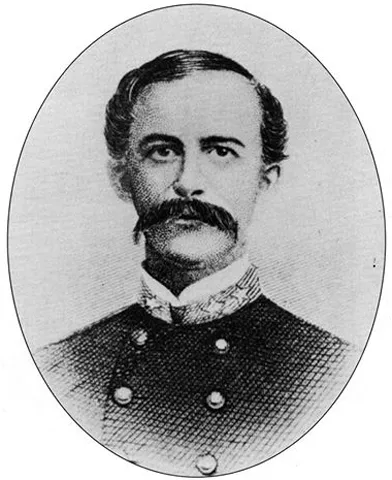
He led a river steamer named “Explorer.” His mission was to answer the question “Could the lower Colorado River be used as a transportation route from the Gulf of California into the interior Southwest?”
The crew battled the upstream currents from the Gulf of California to the area near present-day Las Vegas. Aside from some intimidating run-ins with Indigenous tribes, things were going well.
As they approached Black Canyon, where the Hoover Dam now stands, nature took over. The narrow canyon, mixed with powerful currents and a massive sunken rock, caused the Explorer to crash.
Ives wrote, “For a second, the impression was that the canyon had fallen in. The concussion was so violent that the men near the bow were thrown overboard.”
“We were shooting swiftly past the currents, eagerly gazing at the mysterious depths beyond, when the Explorer, with a stunning crash, brought up abruptly and instantaneously against a sunken rock.” — Joseph Christmas Ives, 1858
Ives, not one to let a little steamer crash kill the exploration vibe, took three men in a skiff and went past Black Canyon to Eldorado Canyon. From there, Ives took off by land, hellbent on seeing what the Colorado River did as it carved its way east.
He got as far as Cataract Canyon and Frazier Well, which is still part of the Hualapai Indian Reservation today. You might know this region better as Grand Canyon West.

The Words Ives Might Regret Today
It was in Frazier Well that Ives penned what we might call a two-start review in today’s terms. Like any good reviewer, he listed pros and cons.
For the positive aspects, he wrote, “The extent and magnitude of the system of canyons is astounding. Fissures so profound that the eye cannot penetrate their depths are separated by walls whose thickness one can almost span, and slender spires that seem to be tottering upon their bases shoot up thousands of feet from the vaults below.”
However, whether it was his frustration guiding his pen or just blunt honesty from a hardy man who couldn’t figure out a way through the river canyon, he noted this famous statement.
“The region is, of course, altogether valueless. It can be approached only from the south, and after entering it there is nothing to do but leave. Ours has been the first, and will doubtless be the last.. to visit this profitless locality. It seems intended by nature that the Colorado river, along the greater portion of its lonely and majestic way, shall be forever unvisited and undisturbed.”
“The region is, of course, altogether valueless. It can be approached only from the south, and after entering it there is nothing to do but leave.”
Again, remember that his mission was only to determine if this could be a transportation route. He wasn’t there trying to create the concept of national parks or log a wonder of the world. His final report gave the go-ahead to use the Colorado River from the Gulf of Colorado to Black Canyon, but not further.

The Next Review: Five Stars
It took another decade before a one-armed Union Army Major penned the next review of the Grand Canyon. Despite the warnings written by Ives, Major John Wesley Powell did his homework and came up with a new plan.
In the 1830s, it became clear that the Green River in Wyoming and the Colorado River must be connected. Numerous attempts to run the whole river downstream from Wyoming through the “Great Unknown” stopped at modern-day Glen Canyon.
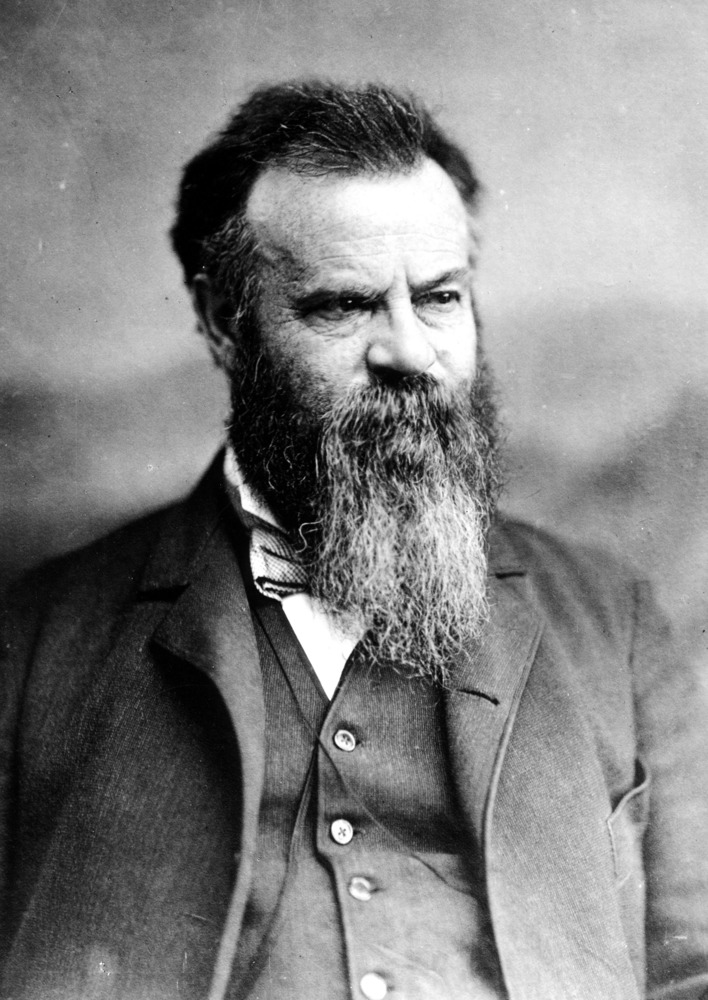
That is, until Major Powell entered the chat. A man as formidable as the Canyon himself, he made the trek at least twice.
His notes summarized it as if it were one trip. He was honest to note that the canyon felt like a “dungeon cell,” and the journey as one of “pain and gloom and terror.”
He also questioned why the Indigenous people lived here. “It is ever a source of wonder to us why these ancient people sought such inaccessible places for their homes,” Powell wrote in 1872, adding, “…they chose to imprison themselves within these canyon walls.”
At one point, as food supplies were running low, he almost gave up and headed to the Mormon settlements north. But that dogged determination that made him a Civil War legend was about to pay off.
His notes summarized the Grand Canyon with a perspective Ives didn’t have, and after seeing sights Ives couldn’t reach.
“The glories and the beauties of form, color, and sound unite in the Grand Canyon… It has infinite variety. Its colors, though many and complex at any instant, change with the ascending and declining sun,” Powell wrote, also stating, “The wonders of the Grand Canyon cannot be adequately represented in symbols of speech, nor by speech itself. The elements that unite to make the Grand Canyon the most sublime spectacle in nature.”
“The wonders of the Grand Canyon cannot be adequately represented in symbols of speech, nor by speech itself.”
As far as future visitors? He saw the potential for those who dared.
“It is a region more difficult to traverse than the Alps or the Himalayas, but if strength and courage are sufficient for the task, a concept of sublimity can be obtained never again to be equaled on the hither side of Paradise,” Powell added.
Translated to today’s language? “The Grand Canyon is harder to travel through than even the Alps or Himalayas, but if you are strong and brave enough to endure the struggle, you will experience a level of beauty and awe unmatched anywhere else on Earth.”
It’s also worth noting that Powell had access to photography. While still in its infancy, the time between Ives exploring the canyon and Powell’s journey was notable in photograph advancement.

From “Profitless” to Grand Canyon National Park
For decades afterward, the Grand Canyon remained difficult to reach and nearly impossible to wrap your head around. To many Americans back east, the canyon was still more rumor than reality.
Then came more photography. Early photographers brought dramatic images of the canyon to the public. The canyon stopped being seen as just a geological obstacle and started becoming a national treasure.
Railroads accelerated that shift. When the Atchison, Topeka, and Santa Fe Railway expanded access to Northern Arizona in the late 1800s, visiting the canyon became far more realistic. Hotels appeared along the rim. Tourism followed.
One of the biggest turning points came when Theodore Roosevelt visited in 1903. Unlike Ives, Roosevelt instantly understood the canyon’s value. He famously urged Americans to protect it, saying, “Leave it as it is. You cannot improve upon it.”
That mindset helped push the canyon toward federal protection. The Grand Canyon became a national monument in 1908 and officially became Grand Canyon National Park in 1919.

Your Grand Canyon Wedding Expedition Starts Here
Thanks to the explorers, photographers, railroad workers, conservationists, and visionaries who helped introduce the Grand Canyon to the world, couples today can experience one of the most extraordinary landscapes on Earth without needing to survive a river expedition to get there.
The National Park Service now allows weddings and elopements at select locations along the canyon’s South Rim, transforming a place once considered a “great unknown” into the backdrop for unforgettable celebrations.
At Grand Canyon Wedding Packages, we help guide that journey. From trusted vendors and photography to timeline planning, location guidance, and permit assistance, we’re your explorers in this fabled landscape.
