Best Space Travel Attractions Near the Grand Canyon for Couples and Wedding Guests

Panorama of Crater in Cinder Hills OHV Area

With the NASA Artemis program reigniting excitement about returning humans to the moon, America has once again become fascinated with space travel. What many travelers don’t realize is that part of that story runs straight through Northern Arizona. These space travel attractions can be part of your Grand Canyon wedding travel plans.

While Houston and Kennedy Space Center in Florida get a lot of the bragging rights, Flagstaff and the surrounding area helped get boots on the lunar ground. The landscapes here, beyond the Grand Canyon, are about as close to the moon as you’ll find on Earth.


Top 4 Space Travel Attractions in Northern Arizona

From volcanic terrain near Flagstaff to meteor impact sites and world-famous observatories, this region quietly became one of the most important places in America’s space exploration history.

In fact, all of the 24 men who walked on the moon first walked through the landscape around Flagstaff as part of their training. If you’re looking for an out-of-this-world adventure during your Grand Canyon wedding trip, or want to share this with your wedding guests, we’ve rounded up the top five sites every space travel fan needs to see.

USGS Astrogeology Science Center

"Grover" the rover that USGS built to train the Apollo astronauts before their trips to the Moon is on display in the lobby of the USGS Astrogeology Science Center in Flagstaff.
“Grover,” the rover that USGS built to train the Apollo astronauts before their trips to the Moon, is on display in the lobby of the USGS Astrogeology Science Center in Flagstaff.

Long before astronauts stepped onto the Moon, scientists in Flagstaff were helping map it. The USGS Astrogeology Science Center became a key hub for Apollo-era astronaut training, planetary mapping, and space exploration research.

Today, visitors can explore the same facility where lunar and Mars mission science still happens, making it one of Northern Arizona’s most underrated stops for space fans. This isn’t your traditional walk-in space travel attraction, but reservations are easy to make by emailing the center, and better yet, it’s free!

Things to see include:

  • The famous Grover lunar rover that trained the astronauts on Earth
  • Explore Moon and Mars maps used in real mission planning
  • Walk the topographic floor map of Mars and Arizona’s unique landscapes
  • Learn how scientists map planets without ever setting foot on them
  • Dive into exhibits about asteroids, impact craters, and robotic exploration

Out-of-This-World Fact: One of the founders of the USGS Astrogeology Science Center, planetary scientist Eugene Shoemaker, became the first person to have their ashes placed on the Moon after NASA carried them aboard the Lunar Prospector mission in 1999.


Lowell Observatory

Lowell Observatory Rotunda Museum

Perched above Flagstaff, Lowell Observatory helped shape modern astronomy long before the Space Race began. Founded in 1894, the observatory is famous for the discovery of Pluto and for decades of planetary research that later supported NASA-era exploration.

Today, Lowell Observatory remains one of the best space attractions in Northern Arizona thanks to its mix of historic telescopes, hands-on exhibits, live science programming, and some of the clearest dark sky viewing in the country.

Visitors can look through telescopes, explore interactive space exhibits, learn about planets and galaxies, and experience the same high-elevation skies that made Flagstaff a global astronomy hub in the first place.

General admission tickets start at $35 for adults, $20 for kids 6-17 years old, and $30 for those 55+. However, check the menu for a list of add-on experiences.

Weddings at Lowell Observatory

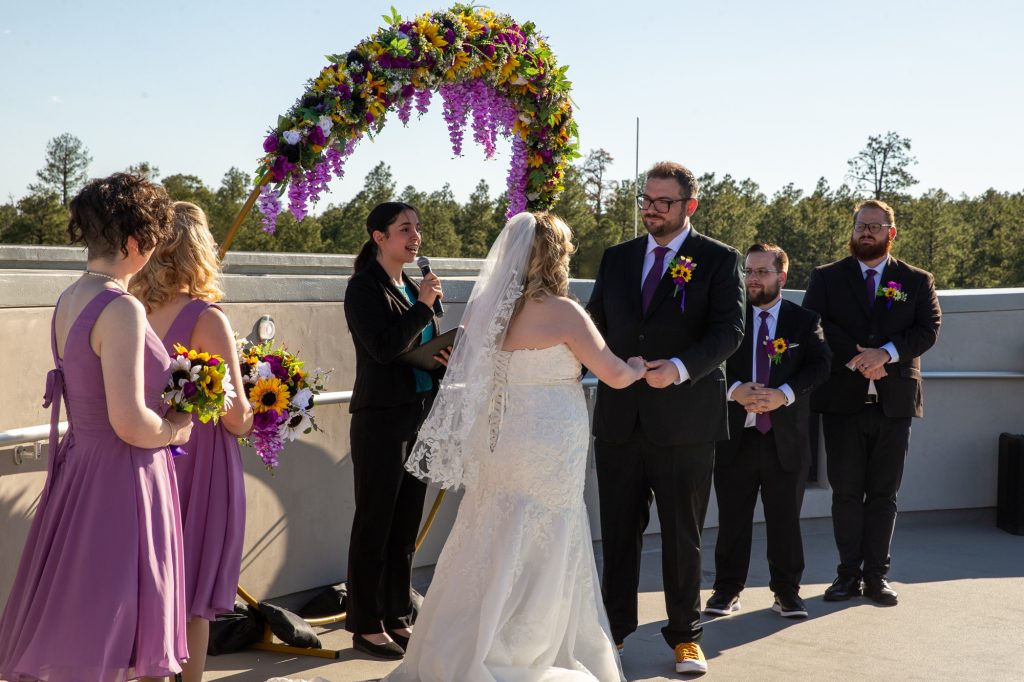
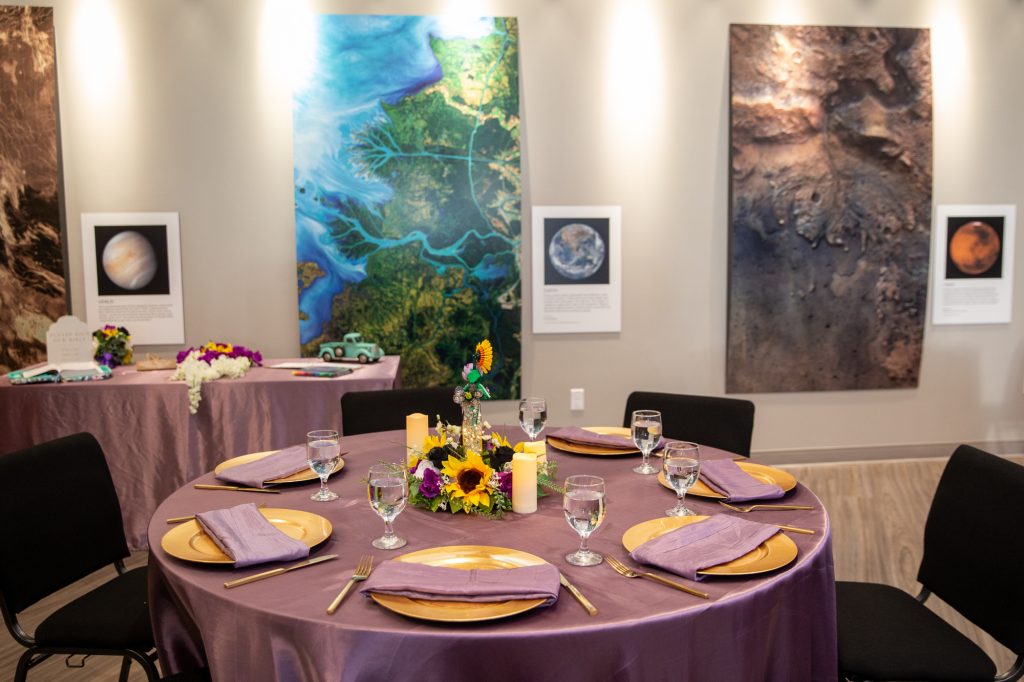
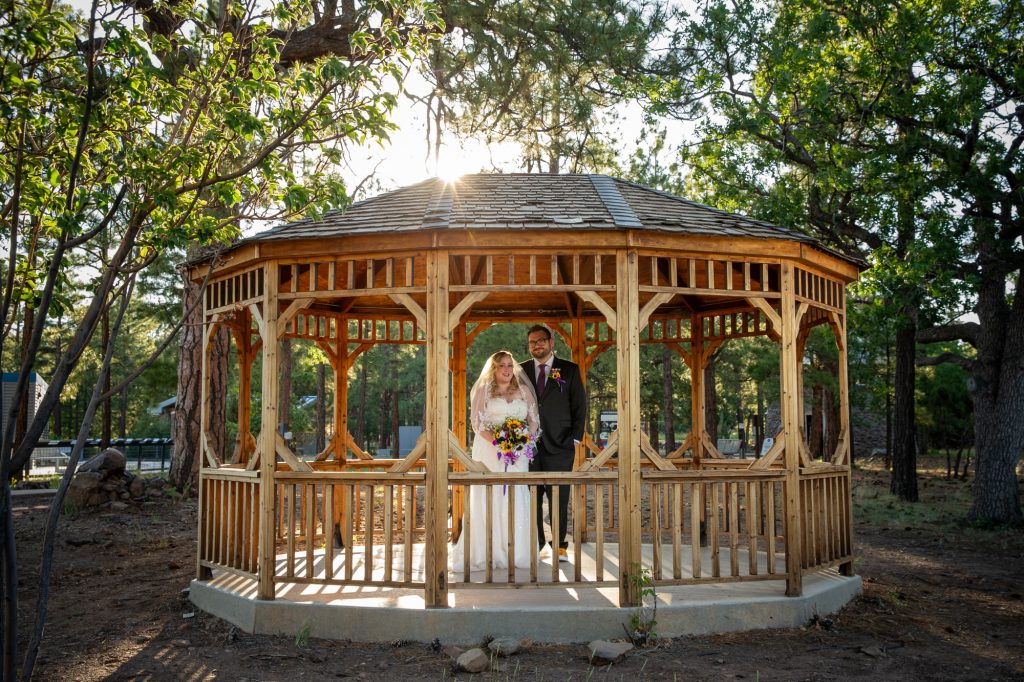
Lowell Observatory offers more than a tourist attraction; it’s also a wedding venue. Contact Grand Canyon Wedding Packages to learn more about having a wedding, elopement, or special event at Lowell Observatory.
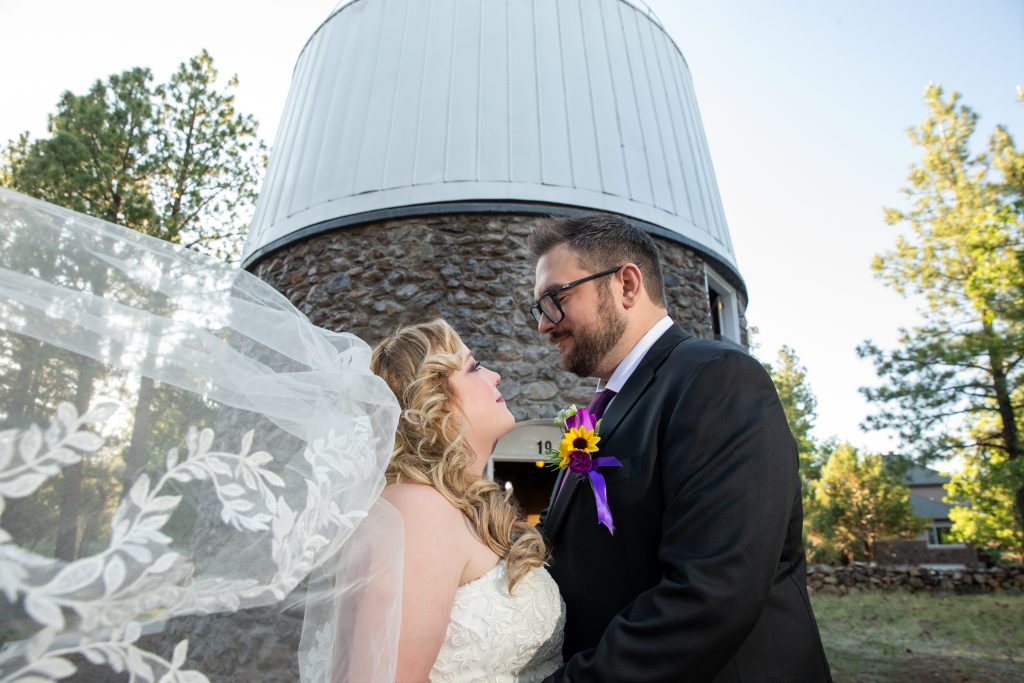
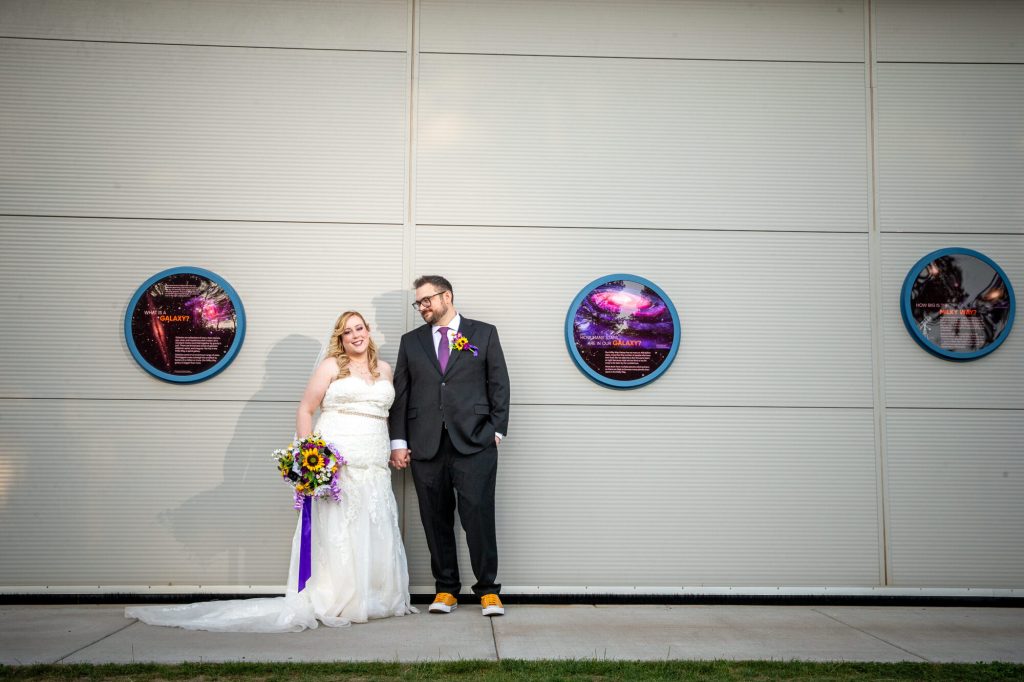
  • Lowell Observatory wedding
  • Lowell Observatory wedding
  • Lowell Observatory wedding
  • Lowell Observatory wedding
  • Lowell Observatory wedding

Cinder Lakes Apollo Training Area

Cinder Lakes Apollo Training Area in Coconino National Forest

Just off Forest Service Road 776 in Flagstaff, one small step takes a giant leap into Apollo astronaut training.

The Cinder Lake Crater Field was created in 1967 when the United States Geological Survey and NASA used explosives to transform volcanic terrain into a simulated lunar surface. After new Moon images revealed a heavily cratered landscape, Apollo astronauts needed a realistic place to practice navigation, geology, and sample collection before heading into space.

Today, the site still looks surprisingly lunar, with hundreds of artificial craters scattered across black volcanic cinders south of Sunset Crater Volcano National Monument. It remains one of the most fascinating hidden space history sites in Northern Arizona.

Want to ride as the astronauts did? A modern-day experience could include the nearby Cinder Hills Off-Highway Vehicle Area.

Meteor Crater

Meteor Crater in Winslow Arizona, one of the space travel attractions in Northern Arizona

About 40 minutes east of Flagstaff in Winslow, Meteor Crater looks like something pulled straight from a sci-fi movie set.

The crater formed roughly 50,000 years ago when a meteor slammed into Earth at speeds estimated at around 26,000 miles per hour. It stretches nearly a mile wide and more than 550 feet deep. It remains one of the best-preserved meteor impact sites on the planet.

The site also became part of America’s space story. During the Apollo era, NASA astronauts visited Meteor Crater for geology and impact training while preparing for lunar missions. Scientists used the crater to better understand what astronauts might encounter on the Moon. The Apollo 11 Space Training Capsule is on display, and admission to the Discovery Center and Space Museum is included with admission.

WHILE YOU’RE HERE: Winslow is part of the Route 66 “Mother Road.” Stop by to get a photo “Standing on a Corner in Winslow Arizona” and drive the musical highway that plays the song.


Astrotourism in Northern Arizona: Space Travel Attractions and Pristine Night Skies

While those space travel attractions keep you busy during the daytime, don’t give up at night. As the first International Dark Sky City and several Dark Sky Parks in the region, stargazing simply must be part of the itinerary.

When you’re ready to start planning a Grand Canyon elopement, wedding, or special event, we can help. As locals, we know the services, vendors, rules, and tools to make your adventure out of this world.

Sycamore Canyon: Meet Arizona’s Second Grandest Canyon

Sycamore Canyon

Most people know Arizona for one canyon. You know the one. Massive. Iconic. Plastered across calendars, postcards, and social media. The Grand Canyon is iconic, but Arizona has another canyon that quietly slips under the radar. Sycamore Canyon stands as the second largest in the state.

As part of the Sycamore Canyon Wilderness, the smaller sibling of the Grand Canyon cuts through the Northern Arizona landscape. The selling points? Dramatic cliffs, dense forest, seasonal waterfalls, and a level of solitude that feels increasingly rare in the Southwest. It also gives a little “Grand Canyon of the Yellowstone” vibes.

It may not have the fame of the Grand Canyon or Yellowstone National Parks, but honestly, that is one part of the appeal.

Sycamore Canyon
Sycamore Falls | Photo Courtesy: Kaibab National Forest.

Where Is Sycamore Canyon?

Sharing boundaries with Coconino, Prescott, and Kaibab National Forests, Sycamore Canyon Wilderness covers more than 58,000 acres. It sits south of Williams, southwest of Flagstaff, and west of Sedona.

Depending on your selected trail and direction of approach, you’ll want to visit a ranger station before heading into the wilderness.

As the name suggests, this is protected wilderness. That means none of the amenities you might expect at the Grand Canyon. Roads can be rough, mobile connections are rare, and it takes a couple of hours of effort driving to even reach a trailhead.

What awaits you when you get there is pretty grand, even by Grand Canyon standards.

Sycamore Canyon
Photo Courtesy: Kaibab National Forest.

How Big Is Sycamore Canyon?

It’s hard being the smaller sibling to the Grand Canyon in Arizona. Even impressive states for a canyon don’t hold a candle to the grandeur of the grandest. However, Sycamore Canyon also offers a more digestible option to explore when the Grand Canyon seems too intimidating.

FeatureSycamore Canyon WildernessGrand Canyon National Park
Ranking in ArizonaSecond largest canyonLargest canyon
Length20 miles278 miles
Massive national park with global recognition7 miles at widestAbout 10 miles average rim to rim
Depth1,080 feet deepAbout 1 mile deep
Rim Elevation4,680 feet7,000 to 8,000 feet
Lowest Elevation3,600 feet at canyon bottomAbout 2,400 feet at Phantom Ranch
Protected Area Size58,441 acres1,218,275 acres
Overall FeelRemote wilderness with lighter crowdsMassive national park with global recognitio

While Sycamore Canyon is the second biggest canyon in Arizona, it’s worth noting that you could fit 22 Sycamore Canyons into the Grand Canyon.

Sycamore Canyon
Photo Courtesy: Kaibab National Forest.

Notable Features in Sycamore Canyon

Aside from the lack of crowds, other elements worth exploring in Sycamore Canyon stand apart from the Grand Canyon’s magnetism.

Where the Colorado Plateau Meets the Mogollon Rim

Part of what makes Sycamore Canyon so geologically interesting is its location near the edge of the Colorado Plateau and the base of the Mogollon Rim. The canyon cuts through layers of limestone, sandstone, and volcanic rock while connecting higher elevation pine forests with lower desert terrain.

That transition creates a surprisingly diverse landscape with changing ecosystems, dramatic cliffs, and terrain that feels different almost every few miles.

Sycamore Falls

One of the biggest surprises in Sycamore Canyon is that it actually has waterfalls. Sycamore Falls is seasonal, so timing matters. After snowmelt or heavy rain, water spills dramatically over layers of volcanic rock into the canyon below. During dry stretches, it can look more like a cliff than a waterfall.

A Rare Riparian Canyon in Arizona

Parts of Sycamore Canyon support riparian habitat, meaning water helps create pockets of surprisingly lush vegetation. Cottonwoods, sycamores, willows, and shaded creek areas break up the otherwise rugged high desert scenery. The scenery feels far more forested and intimate than the sweeping expanses of the Grand Canyon.

Sycamore Creek

We know the Colorado River carved the Grand Canyon. As part of that Colorado River watershed, Sycamore Creek helped shape this canyon landscape. Depending on the season, it may flow steadily, form pools, or nearly disappear in spots. The creek corridor attracts wildlife and adds cooler temperatures in some lower canyon areas.

Sycamore Canyon
Sycamore Creek in Sycamore Canyon | Photo Courtesy: Kaibab National Forest.

Trails of Sycamore Canyon

Trails in Sycamore Canyon lean more rugged than polished. Some routes follow forested rims with wide canyon views. Others drop deep into creek corridors where conditions can change fast with the weather and water levels.

Sycamore Rim Trail

Length: About 11 miles full loop
Difficulty: Moderate

This is the signature hike of the wilderness area. The trail circles portions of the canyon rim through ponderosa pine forest with frequent overlooks into the canyon below. Most of the elevation changes are manageable compared to inner canyon routes, making it one of the more approachable ways to experience Sycamore Canyon.

Parsons Trail

Length: About 8 miles round trip
Difficulty: Moderate

Parsons Trail follows sections of Sycamore Creek and showcases the greener side of the canyon. Hikers may encounter creek crossings, rocky sections, and shaded riparian habitat. The route is popular in warmer months because parts of the canyon stay cooler than exposed rim trails.

Sycamore Canyon Trail

Length: 2 miles, but connecting trails can expand that to up to 12 miles
Difficulty: Difficult

This trail descends into the canyon itself and offers a more remote wilderness experience. Expect uneven terrain, loose rock, steep grades, and limited services. Conditions can vary greatly after storms or seasonal runoff.

Kelsey Trail

Length: About 6.5 miles one way
Difficulty: Difficult to strenuous

Kelsey Trail drops steeply into the canyon through rocky switchbacks and rugged terrain. It is one of the more physically demanding access routes into lower Sycamore Canyon and is best suited for experienced hikers prepared for elevation changes and exposed sections.

Rim of Sycamore Canyon, the second largest canyon in Arizona
View from the Rim of Sycamore Canyon | Credit: USDA Forest Service, Coconino National Forest

Permits or Costs to Enter Sycamore Canyon Wilderness

One of the nice things about Sycamore Canyon is that there is no general entrance fee to enter the wilderness itself.

That said, some trailheads or nearby recreation sites managed by the Coconino National Forest may require a parking or recreation pass depending on where you start your hike. Certain nearby fee areas in Northern Arizona use the Red Rock Pass system or federal recreation passes.

Backcountry camping may require following wilderness regulations, and larger organized groups or commercial activities can require special permits through the Forest Service.

Before visiting, it is smart to check current conditions, road access, fire restrictions, and trailhead requirements through the official Coconino National Forest website since seasonal closures and rules can change quickly in Arizona wilderness areas.

Kelsey Trail Sycamore Canyon
Kelsey Trail view above Sycamore Canyon | Credit USDA Forest Service, Coconino National Forest.

Sycamore Canyon Scenic Drive

Another way to experience the beauty of Sycamore Canyon Wilderness is from your car. The Sycamore Canyon Scenic Drive does include unpaved forest roads, but in dry conditions, the average passenger vehicle should be able to handle the 23-mile ride.

The National Forest Service gives turn-by-turn directions on its website (detailed below), but it’s best to get a map from a ranger station to help navigate the wilderness.

  • From Flagstaff, drive south 29 miles on US 89A through Sedona to Dry Creek Road (FR 152C).
  • Turn north and proceed along FR 152C for 2 miles to the Vultee Arch road and another 2.5 miles to the intersection with Boynton Canyon Road.
  • FR 152C continues southwest, left onto an unpaved road.
  • In about 4 miles, FR 152C intersects FR 525. From here, you can turn north (right) to the Loy Butte spur or south (left) to continue the drive.
  • In another 4 miles, FR 525 intersects FR 525C (Sycamore Pass spur). This road will take you to the East side of Sycamore Canyon.
  • Continue south 5.5 miles to US 89A and another 5.3 miles on pavement back to Sedona.

The Red Rock Loop Road, which accesses Red Rock Crossing and the Verde River, is located off US 89A about one mile south of Sedona.

Sycamore Canyon waterfall
Sycamore Falls in Sycamore Canyon | Photo Courtesy: Kaibab National Forest.

Is the Sycamore Canyon Visit Worth It?

Absolutely, especially if your idea of Arizona involves more than crowded overlooks and shuttle lines. Sycamore Canyon Wilderness delivers a little bit of everything that makes Northern Arizona special. You get canyon views, forest scenery, creek corridors, volcanic landscapes, and hints of the red rock terrain that draws visitors to Sedona.

If you are planning a Northern Arizona getaway, wedding, elopement, or special event, Grand Canyon Wedding Packages, Flagstaff Wedding Packages, and Sedona Wedding Packages are here to help.

Get Your Kicks (and Wedding Pics) on Route 66 in Arizona

must see stops on arizona route 66 road trip

The centennial of Route 66 is upon us. That’s 100 years of celebrating the nostalgia and eccentricities of the Mother Road. A slice of the 2,448-mile road cuts through 385 miles in the center of Arizona.

If you’re planning a 2026 wedding at the Grand Canyon, in Flagstaff, or in Sedona, you might want to consider some of these must-see locations for wedding photos, selfies, or side trips with impromptu photo ops.

This list is also great to share with your wedding party and guests if they plan to do some exploring on their own, or if you want great group shots!

Whether you’re looking for a June 6 (6/6/26) wedding day or just want to join in on the year-long celebration, Arizona is filled with wonderful wedding memories on the Mother Road. 


Top 11+ Stops on a Route 66 Road Trip through Arizona

Photo Shoot Flagstaff’s Route 66 Mural

Start your Route 66 photo journey in downtown Flagstaff, where the city’s bold Route 66 mural outside the Visitor Center gives couples a classic “Mother Road” backdrop. As a bonus, no traffic dodging is required since the seal is safely off the main street. 

The nearby train depot and vintage signage round out the scene, blending Flagstaff’s railroad roots with its mid-century charm. A Route 66 Centennial Celebration is planned for June 6 in Flagstaff.


Ride the Grand Canyon Railroad (Williams)

All aboard for timeless romance. The Grand Canyon Railway links the retro magic of Route 66 with the grandeur of the canyon itself. Williams is the only town where a working railway and historic Route 66 share the same Main Street. Couples can pose with vintage locomotives or hop the train for a once-in-a-lifetime ride into the past.

The Grand Canyon Railway Adventure Elopement package is suitable for couples looking to have a true adventure on their wedding day. This package is a day-trip by train to the Grand Canyon, departing from Williams, AZ.

Pose Around Williams Historic Route 66 District (Williams)

Known as the “Gateway to the Grand Canyon,” Williams glows with retro neon and 1950s style. Walkable blocks lined with diners, motels, and vintage cars make it an irresistible backdrop for golden-hour photos. Every corner feels cinematic, and the mix of bright signage and small-town energy keeps the Mother Road spirit alive.

June 6 and 7 of 2026 are blocked off for the Historic Route 66 Car Show in Williams. 

Route 66 places to see in Williams:
• Pete’s Gas Station Museum
• Cruiser’s Café 66
• Rod’s Steak House


Walk Historic Downtown Kingman

Walk Historic Downtown Kingman offers a mix of preserved 1940s storefronts, colorful murals, and retro neon signs that light up after dark. Along the way, you’ll find cafés, antique shops, and the Powerhouse Visitor Center, home to the Arizona Route 66 Museum, making it one of the most authentic slices of the Mother Road still standing. 

Look for the neon heart marking the “Heart of Historic Route 66” for a photo every lovebird will keep forever.

Check the schedule of events for June events in Kingman, but the annual Route 66 Fest is held every October.


Seligman Historic District (Seligman)

If Route 66 had a beating heart, Seligman would be it. Expect kitschy storefronts, 1950s diners, and murals that make for fun, personality-packed wedding portraits. Road trippers will love the 160-mile stretch from Seligman to Topock, the longest remaining stretch of the original Mother Road. Visit in early May for the Route 66 Fun Run along the route.

Fun Fact: Seligman inspired Pixar’s Cars and served as the real-life model for Radiator Springs. Couples who love Pixar or Route 66 nostalgia can recreate their own “Life is a Highway” moment right here.

Route 66 places to see nearby:

• Delgadillo’s Snow Cap Drive-In

• Roadkill Café

• Historic Route 66 Gift Shop


Oatman Ghost Town (Oatman)

If you’re driving between Las Vegas and Flagstaff, Oatman makes a perfect Route 66 side trip. Once a bustling mining town, it now feels frozen in time with wooden boardwalks, free-roaming burros, and sun-worn storefronts straight out of an old Western. The mix of rustic textures, quirky locals, and classic signage turns even a quick stop into a cinematic photo opportunity.


Twin Arrows Trading Post Ruins (east of Flagstaff)

The two massive arrows shooting into the desert earth are all that remain of this 1950s trading post, but they’re striking enough to anchor an entire photo session. The contrast of bright color, desert emptiness, and Arizona sky makes this a minimalist dream spot.

Twin Arrows in Twin Arrows. Arizona. Photo by Marine 69-71, used under Creative Commons license.

Holbrook’s Wigwam Motel (Holbrook)

Few places capture Route 66 nostalgia like the Wigwam Motel, where guests sleep in concrete teepees surrounded by classic cars. Couples love night shots here—neon reflections, vintage chrome, and a backdrop straight from the golden age of road trips. It’s kitschy, colorful, and unapologetically iconic.

Image courtesy: Wigwam Motel

Truxton Canyon (Truxton)

This quiet stretch between Seligman and Kingman is all about mood. Empty highways, leaning signs, and big-sky horizons make it a photographer’s playground. Truxton is perfect for couples who want a sense of isolation and romance, not just retro flair. At sunset, the whole landscape glows amber.

Route 66 places to see nearby:

• Frontier Motel & Café (Truxton)

• Keepers of the Wild Nature Park (Valentine)

• Hackberry General Store


Grand Canyon Caverns

Just off Route 66, Grand Canyon Caverns delivers atmosphere both above and below ground. Couples can shoot among vintage cars and quirky roadside attractions, or descend into the caverns for something surreal and unforgettable. The underground wedding suite adds a once-in-a-lifetime story to any Route 66 celebration.

Route 66 places to see nearby:
• Caverns Inn Motel
• Peach Springs Trading Post
• Hualapai Lodge

Grand Canyon Caverns is near the Hualapai Reservation, which is home to Grand Canyon West. When you see ads in Vegas for chopper tours to the canyon, the Grand Canyon Skywalk, or Havasupai Falls, this is the section being referred to—not Grand Canyon National Park, where we do weddings.


Stand on a Corner in Winslow, Arizona

Less than an hour from Flagstaff, you’ll be in the city where the Eagles made a simple street corner iconic. There’s even a flatbed Ford ready for posing! If you take the trip to Winslow, be sure to explore the historic district, cultural icons, and natural wonders. 

Route 66 places to see in/around Winslow:

• La Posada Hotel

• Old Trails Museum

• Meteor Crater Natural Landmark


Plan Your 2026 Northern Arizona Wedding

We know a lot of people are planning to take the Mother Road adventure in 2026, and this is a great time to pair it with a proposal, elopement, or wedding.

Arizona Destination Management offers several options for couples looking to exchange vows in Flagstaff, the Grand Canyon, or Sedona. We offer curated wedding packages that make for a stress-free and fabulous wedding, micro-wedding, or elopement.

Keep reading for more epic adventures in Northern Arizona. 

Route 66 Turns 100: How to Time Your Arizona Wedding with the Celebration

route 66 100 years old

Few places capture the spirit of Americana like Route 66, and in 2026, that legendary stretch of asphalt turns 100. Arizona boasts the longest remaining stretch of the original Route 66, winding through red rock country, pine forests, and the kind of neon-lit postcard towns. It’s the perfect pairing for weddings in Sedona, Flagstaff, or the Grand Canyon.

For couples dreaming of a destination wedding with personality, this is your moment to merge romance and road-trip nostalgia. Expect the wedding date of June 6 (6/6/26) to book up quickly, but don’t worry, the Mother Road celebration runs all year long. 


The Importance of Arizona on Route 66

Arizona isn’t just another stop on Route 66—it’s the state that kept the Mother Road’s soul alive. When much of the original highway was bypassed by the interstate, Arizona towns like Seligman, Williams, and Kingman fought to preserve the Mother Road’s character, sparking the grassroots movement that saved Route 66 from fading into history.

This stretch covers more original mileage than any other state and offers some of the best-preserved roadside Americana in the country. You’ll find vintage motels still glowing with neon, trading posts that haven’t changed in decades, and diners that serve up milkshakes the same way they did in the 1950s.

Some other notable facts about Arizona’s leg of Route 66 include:

  • Length: Arizona’s stretch of Route 66 runs about 385 miles, the longest continuous preserved section of the Mother Road in the U.S.
  • Original Route: It follows the historic path from Lupton (near the New Mexico border) to Topock (on the Colorado River).
  • Pixar Connection: The town of Seligman inspired Pixar’s Cars and the fictional Radiator Springs, giving Arizona a starring role in modern Route 66 nostalgia.
  • Historic Recognition: In 1985, the stretch from Ash Fork to Kingman was officially designated as a Historic Route, one of the first in the nation.
  • Scenic Variety: The Arizona route crosses desert plains, red rock mesas, pine forests, and mountain passes—all within a single day’s drive.
  • Tourism Impact: Arizona remains one of the most photographed and visited Route 66 states, drawing travelers from over 60 countries each year.

For couples planning a wedding, that blend of natural beauty, nostalgia, and cultural history is exactly what sets Arizona apart. You’re not just getting married near Route 66—you’re becoming part of its story.


Iconic Route 66 Stops within an Hour of Flagstaff

When planning a destination wedding in Northern Arizona, the bonus of having Route 66 nearby during the Centennial year is a real draw for your guests, too. If your wedding base is in Flagstaff, Sedona, or the Grand Canyon area, you’re surrounded by photogenic Route 66 towns worth a side trip.

  • Flagstaff – Cool, walkable, and full of mid-century neon that still flickers to life at night. Between the mountain backdrop, old-school motels, and live music spilling from breweries, Flagstaff nails that retro-meets-modern vibe without trying.
  • Williams – Known as the “Gateway to the Grand Canyon,” this Route 66 hub is full of classic diners, murals, and train-station charm.
  • Seligman – Bursting with vintage signs and quirky storefronts, this town inspired Pixar’s Cars and makes for colorful photo ops.
  • Winslow – “Standin’ on the Corner” is more than a lyric here—it’s a photo tradition. A laid-back stop with authentic Americana vibes that begs you to Take It Easy.

MORE: Epic Adventures in Northern Arizona


Start Planning Your Mother of All Weddings Near the Mother Road

Route 66 turning 100 is sure to bring the Mother Road back to life, and anyone with a love of Americana nostalgia will want a slice. Look for official Route 66 Centennial events in your preferred Arizona city. 

Whether you’re looking for an elopement, micro-wedding, or wedding near the Grand Canyon, Sedona, or Flagstaff, let our team find the perfect location for your special day. With decades of experience planning weddings and an all-local team, we’ve created the best packages that exceed your expectations while keeping the process stress-free.

The team at Grand Canyon Wedding Packages offers special event planning, whether it’s a Route 66 bike rally, car show, work gathering, or any other kind of celebratory event. We know this region, the vendors, and the options to help you plan a wonderful event anytime during the Route 66 Centennial year and beyond.

Which Time Zone Is the Grand Canyon In? Season Guide + Tips

“What time is it in Arizona?” It’s a simple question with a not-so-simple answer, depending on what time of year and what part of Arizona you’re visiting. The Arizona time zone confuses some because the state doesn’t adhere to Daylight Saving Time.

If you’re trying to schedule travel plans or an itinerary for a Grand Canyon wedding, we’re here to make “Arizona Time” easier to understand.

We found this topic especially important since many online articles about Arizona’s time zone were more confusing than helpful. Read on to find out everything you need to know about Arizona’s unique time zone.

NOTE: For ease of reading this article, Standard Time references will be referred to as “winter,” while Daylight Time will be listed as “summer.”


Why Doesn’t Arizona Follow Daylight Saving Time?

To answer that question, it helps to know the purpose of the time change. Time zones were established by railroads in the late 1880s, and every state was on Standard Time.

The idea of moving ahead one hour in the spring came from the energy-saving cost benefits during wartime in the early 1900s. It then transitioned to the benefit of having an extra hour of daylight in the evening during the warmer spring and summer months.

The Uniform Time Act of 1966 established a fixed schedule of Daylight Saving Time at the federal level. Since then, Daylight Saving Time has started on the second Sunday in March and ends on the first Sunday in November–always on a weekend and always at 2am local time. In March, all clocks move forward one hour. In November, clocks “fall back” an hour.

Arizona wasn’t happy with Daylight Saving Time from the start. Simply put, Arizona leaders believed the state already had enough heat and sun in the summer. Plus, adding an hour would increase energy consumption and costs for air conditioning.

Plus, consider that even without Daylight Saving Time, August temperatures at the bottom of the Grand Canyon reach 106° F on average and reach 110° F in Yuma. Another hour of summer sunshine wasn’t necessary or desired.

Is Daylight Saving Time Optional? Under the Uniform Time Act of 1966, states have the option to exempt themselves from DST by passing a state law or regulation. Arizona, along with Hawaii, has chosen not to observe it.

Not ALL of Arizona Skips Daylight Saving Time

The only exception to Daylight Saving Time in Arizona is the Navajo Nation, a sovereign nation with a footprint that is largely in northeastern Arizona but also expands to Utah and New Mexico.

The decision to adopt Daylight Saving Time in the Navajo Nation keeps the multi-state land in the same time zone year-round.

However, there are more exceptions within that exception. Keep reading for specific examples.


How Does Daylight Saving Time Impact Arizona?

At the root of Arizona time zone comprehension is understanding that half the year, Arizona is in tandem with the Mountain Time Zone. The other half of the year syncs with the Pacific Time Zone.

When visitors outside the state make travel arrangements, things can get tricky. This is also where many sources make it overly confusing.

Arizona is always in Mountain Standard Time, which is not the same as saying Arizona is always in the Mountain Time Zone.

Arizona is always in Mountain Standard Time, which is not the same as saying Arizona is always in the Mountain Time Zone. Mountain Standard Time is always UTC-7. (UTC, or Universal Time Coordinated, serves as the time zone baseline from which all other time zones are calculated. Here’s an easy UTC clock.)

In winter, Arizona is on Standard Time (UTC-7). When other states “spring forward” in March, that means they are on Daylight Time. Utah goes from Mountain Standard Time to Mountain Daylight Time for summer, which is UTC-6. Since Arizona doesn’t change, it’s still at UTC-7. Technically, it’s still on Mountain Standard Time.

It’s the “Mountain Standard Time” year-round part that confuses some because flights, weddings, and attractions aren’t booked with that caveat in mind. They are booked based on Pacific Time and Mountain Time in mind, whether it’s summer or winter (Daylight or Standard).

Now, to further understand, it’s important to note that Pacific Standard Time is UTC-8, but when Daylight Saving Time kicks in, the one-hour leap puts it at UTC-7, which is the same as Arizona. In summer, it’s most commonly understood that Arizona is on Pacific Daylight Time since they are both UTC-7.

Arizona technically sticks to Standard Time year-round. It’s just easier to say, “Arizona is in the Pacific Time Zone in the summer.”

Harun Mehmedinovic grand canyon wedding packages destination weddings USA

Examples of Arizona’s Time Zone Travel Impact

The concept becomes easier to understand when you look at real-life examples of how this transition can impact a trip to the Grand Canyon for a wedding or elopement.

Driving from Las Vegas to the Grand Canyon

If you’re flying into Las Vegas (LAS) for the drive to the Grand Canyon’s South Rim in summer, the route is 280 miles and will take about four hours and 15 minutes. Nevada and Arizona will be in the same time zone. If you leave Las Vegas at noon, you’ll arrive at Grand Canyon Village around 4:15pm.

Leaving LAS on a winter day still takes about 4:15 drive time. The difference is that LAS will be on Pacific Standard Time. When you cross into Arizona, you’ll be on Mountain Standard Time, meaning the clocks move ahead an hour. That same drive has an arrival time of 5:15pm, even though you’ve driven the same distance.

On the return trip, driving from the Grand Canyon to LAS means you leave at noon, making the four-hour 15-minute drive, but you’ll go back an hour when you cross into Nevada. That means instead of arriving at 4:15pm, you’ll arrive at 3:15pm during winter.


Flying Between Time Zones to Arizona

Those flying into Phoenix might notice something odd when booking flight times from different time zones. Let’s look at Denver as an example.

Denver and Phoenix are both in Mountain Standard Time in winter. The flight between the two cities takes roughly two hours. A noon flight out of DEN in winter will get you to PHX at 2pm.

That same flight that leaves at noon in summer will have an arrival time of around 1pm since you “gained an hour” flying from Denver’s Mountain Time zone to Arizona’s alignment with Pacific Daylight Time.

On the other hand, flying from Los Angeles is always a 90-minute flight. However, in winter, a 7am flight gets you into Phoenix at 9:30am. That’s due to 90 minutes of flight plus the hour gained when moving between Pacific Standard Time and Mountain Standard Time.

In summer, the 7am flight lands at 8:30 am since both L.A. and Phoenix are in sync with Pacific Daylight Time.


Arizona Time Zone Easy Calendar

Visiting Antelope Canyon, Glen Canyon, or Monument Valley

As noted above, the Navajo Nation adheres to Daylight Saving Time. When planning things to do during your Grand Canyon wedding trip, you’ll run into places that are in Utah or within the boundaries of the Navajo Nation.

Again, in winter, Arizona, Utah, and the Navajo Nation are in the Mountain Time Zone. Planning times aren’t a challenge. However, summer is where things get confusing when Utah is one hour ahead of Arizona.

Here’s why:

  • Glen Canyon National Recreation Area: While most of the NRA and Lake Powell are in Utah, the headquarters is in Arizona. That means the entire NRA is at the same time as the Grand Canyon, no matter what.
  • Antelope Canyon: While this stunning slot canyon wonderland is on the Navajo Nation, it is an exception to the Daylight Saving Time rule. Since tours are required to explore the canyons, organizers found it easier to keep those on Arizona Time.
  • Vermilion Cliffs National Monument: Depends on where you are within the monument, but all permit system times are based on the Utah/Navajo Nation. In-person activities and hikes will follow the time zone of the state you are in.
  • Monument Valley: This spectacular scenic drive straddles Utah and Arizona but is within the Navajo Nation. Daylight Saving Time applies. It will always be in the same time zone as Salt Lake City.
Vermilion Cliffs The Wave Coyote Butte North Arizona

Adjusting Your Phone for Arizona Time

Whether the Grand Canyon wedding couple or members of the wedding party want to explore beyond the Grand Canyon, it’s important to know that mobile phones don’t understand these complex rules.

Your phone and vehicle clock will change with the firm boundaries controlled by GPS. This is where location tracking for clocks can cause additional problems since you’ll never be 100% sure if the time is correct. But there is a solution.


Sunrise and Sunset Times at Grand Canyon’s South Rim

We know many couples want to have a sunset wedding or photo shoot, and you can plan around that time of day. It’s just as important to prepare for the Grand Canyon South Rim weather as it is for the sun angle.

While the days get longer or shorter with the seasonal transitions, the lack of adjusting an hour forward or back for Daylight Saving Time gives a more consistent time frame for sunset viewing and photos.

On the shortest day of the year, December 20, days last about nine hours and 45 minutes. Sunrise happens at 7:30am, and sunset is 5:15pm. On the longest day of the year, July 20, expect 14 hours of daylight, with the sunrise at 5:27am and sunset at 7:42pm.

That means Grand Canyon sunsets at the South Rim will always be somewhere between 5:15pm and 7:42pm.

MORE: Full list of sunrise, sunset, moonrise, and moonset times from Grand Canyon National Park


Take Time to Explore Grand Canyon Elopement Possibilities

We wrote this article to help clear confusion, not create it. At the same time, it is always helpful to confirm with a vendor which time zone transition they adhere to in the summer.

You can also contact us with questions or to start planning a wedding, elopement, or proposal.


Pin Arizona Daylight Saving Time Explainer

EPIC Northern Arizona Adventures for a Grand Canyon Wedding

Shoshone Point Grand Canyon Wedding

Planning a Grand Canyon wedding comes with plenty of adventures to be found before and after the ceremony. Northern Arizona is bursting with unique places to visit, from the lap of high-desert luxury to some of the hardest hikes in the country. 

We put together this general overview to help you explore some of these options. Our team has spent years exploring this region and can help with excursions, tours, or just general guidance and insider tips. 

Throughout this list, we’ll highlight some of the regions and things to do within those areas of Northern Arizona, figuring in a wide variety of options for different ages and interests.

Wedding couple standing on a ledge of the Grand Canyon
The Grand Canyon is a stunning place for a wedding, but Northern Arizona is filled with many other beautiful adventures.

The Parts of the Grand Canyon

Our Grand Canyon wedding services include six of the best points on the South Rim, but it also helps to understand that not all of the Grand Canyon is Grand Canyon National Park. Let’s quickly breakdown the Arizona Grand Canyon regions.

Grand Canyon National Park

The national park includes entrances at the South Rim and North Rim. It is not feasible to travel between the two rims in a day. The two are about 200 miles apart, which will take about four hours to drive. 

At the same time, the North Rim only sees a fraction of the tourists that the South Rim does, and it stands 1,000 feet taller. If anyone in your group is considering a rim-to-rim hike during the week of your wedding, starting at the North Rim is ideal. 

Keep in mind that the North Rim services close from October 15 through May 15 due to winter weather. After December 1, the road to the North Rim closes to vehicles. 

Shoshone Point in Grand Canyon National Park
Shoshone Point in Grand Canyon National Park is one of the approved locations for a Grand Canyon wedding.

Grand Canyon-Parashant National Monument

It’s important to note that Grand Canyon-Parashant National Monument is west of Grand Canyon National Park, covering almost as much space. The National Park Service and Bureau of Land Management co-manage this location, which is only accessible through St. George, Utah.

Named, in part, after the Parashant Gorge, this monument is vast, remote, and rugged, with four wilderness areas. No paved roads, amenities, or mobile service is found there. This is not a place to visit without extensive wilderness experience. 

Grand Canyon Parashant Arizona Adventures
Grand Canyon-Parashant National Monument

Grand Canyon West

On the western side of the canyon, land owned by the Hualapai Tribe offers excursions on the river, hiking, helicopter rides, and ziplining. This is also where the famous Grand Canyon Skywalk is located, a curved walkway that juts out 70 feet over the rim.

It’s important to note that the drive to Grand Canyon West takes about four hours. Basic admission for the Skywalk and entrance costs about $70. 

THE ARIZONA STRIP: The area known as the Arizona Strip is the remote and rugged section of Arizona north of the Colorado River, served by various federal and state land management agencies.

picture of the Grand Canyon West skywalk
Grand Canyon West Skywalk is on tribal land 240 miles away from Grand Canyon National Park.

MORE: Weddings at Grand Canyon West vs. Grand Canyon National Park


National Forests

Two national forests in Northern Arizona offer more adventures in the wilderness. Kaibab National Forest is split into two parts, separated by Grand Canyon National Park. 

The area surrounding Flagstaff and Sedona is part of Coconino National Forest, with three districts covering nearly two million acres. 

Peak baggers should know the highest summit in Arizona is in Coconino National Forest. Humphreys Peak is 12,633 feet high. On the other hand, you can also head underground to the Lava River Cave, a former molten lava tube.

Kaibab National Forest Northern Arizona Adventures
Kanab Creek Wilderness in Kaibab National Forest.
(Courtesy: U.S. Forest Service, Southwestern Region, Kaibab National Forest)

The Painted Desert

Those looking for the Painted Desert of Arizona should look east/northeast. The best way to see it is by driving through Petrified Forest National Park. Keep in mind that the park is not open 24/7 to protect the precious resources inside that were too often subject to vandalism or theft. 

Petrified Forest is about three hours from the Grand Canyon South Rim on the way to New Mexico. A drive there takes you through the charming towns of Holbrook and “Standing On a Corner In” Winslow, Arizona. 

In between Flagstaff and Winslow, an out-of-this-world attraction takes guests to the edge of a mile-wide crater. Meteor Crater is more than 50,000 years old, and the Barringer Space Museum details how astronauts trained here to walk on the moon. Sunset Crater, just north of Flagstaff, is the volcanic kind that changed the landscape a thousand years ago. 

DID YOU KNOW? 2026 will mark the 100th anniversary of the Mother Road, Route 66, and a huge centennial celebration is being planned at locations along the way. 

Northern Arizona Adventures Painted Desert
The Northern Arizona Painted Desert is seen in Petrified Forest National Park. (Courtesy: NPS/Stuart Holmes)

Page, Arizona Things to Do

About two and a half hours northeast of the Grand Canyon, Page is surrounded by its own natural treasures near the Utah state line. The place might look familiar as several locations were used in blockbuster films.

The largest natural attraction near Page is Glen Canyon National Recreation Area, a much easier way to enjoy the Colorado River than you find in the Grand Canyon. Horseshoe Bend, where the river curves into a horseshoe shape, is one of the top photo ops in Northern Arizona. Glen Canyon Dam is also a sight to behold.

Antelope Canyon stuns with swirling slot canyons and colorful combinations of desert rock. This amazing site is at Lake Powell Navajo Tribal Park, south of the river and lake just east of Page. Only guided tours are allowed in the slot canyons. Stargazing tours are also offered.

If you’re considering a visit to Rainbow Bridge National Monument, please note the distance and remote location. Plus, access is through the recreation area, but the monument is on tribal land. 

Those who want to explore the wilderness in more solitude can check out Vermilion Cliffs Wilderness, which has colorful sandstone formations you can’t find in the Grand Canyon. Enter the lottery if you want to see The Wave, as only a limited number of people are allowed daily.

Reflection Canyon at Glen Canyon National Recreation Area, one of the best things to do in Northern Arizona.
Reflection Canyon at Glen Canyon National Recreation Area. (NPS Photo)

Williams

About an hour south of Grand Canyon Village, Williams is a nostalgic trip back in time. As one of the stops on Route 66 before I-40 was extended, plenty of original Mother Road locations are preserved and open to explore. 

Williams is also where the Grand Canyon Railway starts, a scenic ride that started in 1901. 

Other places to consider in Williams include: 

Grand Canyon Railway Northern Arizona Adventures
We can help plan an excursion on the Grand Canyon Railway from Williams to the South Rim of the Grand Canyon.

Flagstaff

Flagstaff sits around 7,000 feet above sea level and offers a robust four seasons of fun. Downtown Flagstaff mixes modern amenities with historical attractions and trendy nightlife. Plus, get your kicks on Route 66 locations in Flagstaff.

As the first International Dark Sky City, you’ll notice the steps taken to dim the bright lights of the big city. Get a close look at the stars from Lowell Observatory. 

Snowbowl sounds like it’s just for skiing, but get ready for year-round fun. Plus, the ski season in 2024 went into June! Summer includes sky rides to see the tallest peaks in the state.

Here are some of our other favorite stops in Flagstaff.

Humphreys Peak near Flagstaff, Arizona, under the night sky.
The highest point in Arizona is Humphreys Peak, just outside of Flagstaff. (Photo/U.S. Forest Service Coconino National Forest.)

Sedona 

Between Flagstaff and Phoenix, off winding roads, Sedona is a magical place waiting to be explored. It’s known as much for its natural beauty as its luxurious amenities and vortex energy centers. 

Sedona’s vibe is a unique blend of natural beauty, spiritual energy, artistic creativity, and a laid-back, welcoming atmosphere, attracting those seeking outdoor adventures, healing experiences, and inspiration. 

WHAT IS A VORTEX? The Sedona vortices are believed to be powerful energy centers where the earth’s energy is said to enhance meditation, healing, and spiritual experiences.

The four vortex centers are: 

  1. Airport Mesa 
  2. Cathedral Rock
  3. Bell Rock
  4. Boynton Canyon

Another romantic and spiritual stop in Sedona is the Chapel of the Holy Cross. Built into the red rock formations, this architectural marvel offers a serene place for reflection and panoramic views of Sedona’s landscape.

The Sedona Museum offers a great walk-through of time to see how a remote region became a sanctity of escape and relaxation.


Explore Outdoors

Surrounded by the beauty of red rocks, canyons, and challenging climbs, there’s a path for everyone in Sedona. Various tours are available, from jeeps to walking adventures. Explore on your own by renting a bike, off-road vehicle or ATV. 

  • Oak Creek Canyon: Often referred to as a smaller cousin of the Grand Canyon, Oak Creek Canyon is a scenic gorge with lush vegetation, crystal-clear streams, and numerous trails. 
  • Slide Rock State Park: Located in Oak Creek Canyon, this state park is named for its natural water slide formed by the slippery bed of Oak Creek. 
  • Red Rock State Park: A 286-acre nature preserve offering hiking trails, bird watching, and stunning views of Sedona’s red rock formations. 
  • Amitabha Stupa and Peace Park: A serene spiritual site featuring a 36-foot stupa, meditation areas, and scenic trails, inviting visitors for reflection and healing.
A couple relaxing on a hammock with Sedona mountain views in the distance, one of the best things to do in Northern Arizona.
(Courtesy: Sedona Chamber of Commerce & Tourism Bureau)

Art Vibes

Whether you’re browning or buying, Sedona’s art collections could easily fill an entire day. Enjoy funky creations, fine art, or exquisite jewelry.

  • Tlaquepaque Arts and Crafts Village: Designed to resemble a traditional Mexican village, this charming shopping area has galleries, boutiques, and restaurants.
  • Sedona Arts Center: Rotating exhibits and monthly events showcase Sedona’s creativity.
  • Sedona Artist Market: Explore some of the unique and creative artworks, from paintings to pottery to jewelry.
  • Exposures Fine Art: A must-see for art lovers as this studio has won numerous awards, including one of the bets things to do in Sedona.

Spa Services

One of the best spa cities in Northern Arizona, and the Southwest for that matter, is Sedona. Some resorts have spas on-site, while day spas dot the city layout. When you need to relax, recenter, and recharge, there’s no place quite like Sedona.

Red Rock Ridges Sedona Bear Mountain Northern Arizona Adventures
The Red Rock Ridges near Sedona in Coconino National Forest is one of many outdoor places to explore in Coconino National Forest’s Red Rock Ranger District. (Photo/U.S. Forest Service, Coconino National Forest)

Map of Northern Arizona Adventures


Adventures in Northern Arizona

While you’re in this part of the state, it makes sense to explore as much as you can. We can help plan tours, excursions, or hikes, and we even give guidance for the best sunrise and sunset spots or the best breakfast cafes.